Graham Harding 7 April 2026
Which Sandhurst?
When Graham and Helen Harding moved to Sandhurst in Berkshire, they consulted the internet about local amenities but, instead of information, they got back a question: Which Sandhurst? It turned out that there were two other Sandhursts, besides their own: one in Gloucestershire and one in Kent.
They decided then and there that all three must be visited and in 2017 they embarked on : ‘The Great Sandhurst Walk’.
Gloucestershire to Berkshire
Main roads link the three towns in a straight 120-mile line but the Hardings decided to use named footpaths wherever possible and avoid tarred roads and towns. The wavy route that resulted increased the distance to 180 miles.
Sandhurst in Gloucestershire turned out to be a village of just 450 souls with a church dating back to the fourteenth century and a bench dedicated to Prince Charles and Lady Diana Spencer. Near the River Severn sightseeing was restricted by flooding after the ’2018 Beast from the East’ (remember that?). At least they had a very distant view of Gloucester Cathedral. Gloucester Airport and various motorways were obstacles that had to be circum-navigated.
Sadly, you will now no longer see the Air Balloon pub, which commemorated the first air-balloon flight in 1783, as it has been demolished since the Hardings’ walk but you may have a better view from Crickley Hill than they had, if the mist has lifted!
Our walkers now crossed the Fosse Way to Coln Rogers. The village was one of the few where all soldiers sent to war in WWI survived the conflict, it is known as a 'thankful village'. There are only 53 of such places in Britain. Then on to Bibury via the curiously named Potlickers Lane. St Mary’s in Fairford is notable for its complete set of 28 medieval stained-glass windows, one of the earliest and best-preserved in England. The Christmas Shop in Lechlade was still doing business in June. Badbury Clump is reputed to have been the site of one of King Arthur’s battles – along with many other places.
The Cotswolds are sheep country and Great Coxwell Barn – the size of a cathedral – was built for sheep-shearing and processing wool.
On the Ridgeway, the Hardings climbed up for a closer look at the Uffington White Horse. They didn’t think it looked much like a horse but then neither did Uffington Castle look much like most people’s idea of a castle.
Middle Section
Following the path of the A3 brought them to the Vale of the Racehorse and via the Lambourne – one of our precious chalk streams – to the Watermill Theatre outside Newbury. At Newbury they were obliged cross the High Street to continue on their way to Silchester, passing en route the Grade II listed Monkey Marsh Lock – a rare turf lock.
At Silchester they saw the vestiges of Roman walls and amphitheatre then off on the Devil’s Highway to Staines and along the River Blackwater to Sandhurst number two. The Happy Christmas bridge with its eponymous graffiti has long been used by locals as a landmark so, when the Council decided to clean it up, there was such an outcry that they were obliged to replace the Happy Christmas! This Sandhurst is, of course the home of the famous Royal Military Academy at Shepherd Meadows.
From Surrey to Kent
Continuing West to Christmas Pie village, which has nothing to do with pies by the way, then up on the Hog’s Back to ancient St Bartholomew’s church, dating back to before the Norman Conquest. On to the Watts Gallery, featuring paintings by George Frederick Watts and well worth a visit. Then the River Wey which may one day be joined by canal to the River Arun. Along a path that was once a railway line past the long-deserted Bromley & Wonersh station and a fascinating sculpture called Prospectus by Giles Miller.
The next feature of interest was Ewhurst windmill – the inspiration for George Harrison’s song ‘Here Comes the Sun’. At Leith Hill Tower there is a fine view – if you are lucky with the weather!
Then across the Weald between the West Sussex Downs, skirting Gatwick airport, to the Crowley Down First World War memorial.
A strongly-scented hike through swathes of wild garlic and bluebells brought them to the Bluebell Line where they were lucky enough to see the Flying Scotsman which happened to be passing through.
Hartfield on the edge of Ashdown Forest is Pooh territory and the beloved bear is featured everywhere. Next, a walk round the Eridge deer park near Frant where they were pleased to – eventually - see a few deer but less pleased to nearly step on an adder!
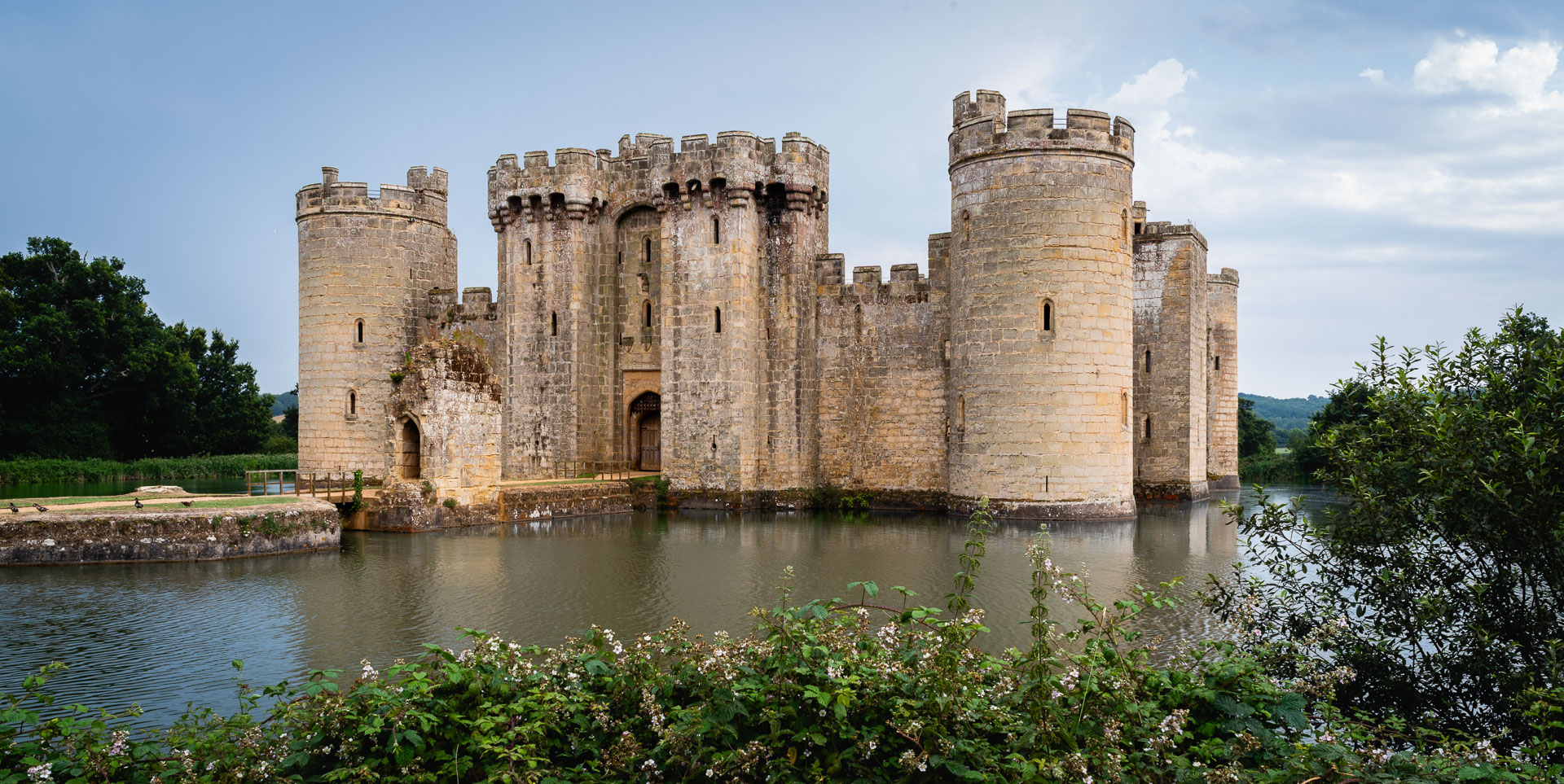
Now, at last, they were in Kent and on the Roman Road to Hastings. The romantic ruins of Bodiam Castle and then – hurrah – their destination: Sandhurst number three!
7 April 2026