A talk by Dr James Taylor
Of course we’ve all heard of Grace Darling: the brave lighthouse keeper’s daughter who braved the stormy seas to rescue shipwrecked people. But it may be that that is all we knew until Dr James Taylor fleshed out the story at our March u3a meeting in the Victoria Hall. Dr Taylor is an art historian and so much of his talk was focussed on the many artists who depicted Grace, her family and imaginative representations of her brave deed. Artists such as Thomas Musgrave Joy, John Wilson Carmichael and Henry Perlee Parker. The most celebrated being an oil on canvas by artist F. S. Lowther in 1886 - “The Rescue of the SS Forfarshire by Grace Darling”.
Getting back to Grace herself: she was born on 24 November 1815 in her grandfather’s cottage in Bamburgh, Northumberland. She was the seventh child of nine (four girls and five boys) and the daughter of William and Thomasin Darling. Her father, William, followed his father, Robert, to become a lighthouse keeper and Grace grew up on the Farne Islands, first at Brownsman Island and, later, Longstone Rock.
William was still allowed to manage the land around Brownsman Island where he grew vegetables. He was joined by his wife, Thomasin, his daughter Grace and their dog, Happy. The rooms in the lighthouse were small - even the lowest and largest one which acted as kitchen and living room. William himself was a stern father but not unkind. He played the violin and passed on his love of singing and music to the rest of the family. Grace spent her childhood studying, keeping the house clean and helping her father look after the lighthouse. She would even join her father when he went out in the boat and she took her turn watching the sea, day and night, from the top of the lighthouse.
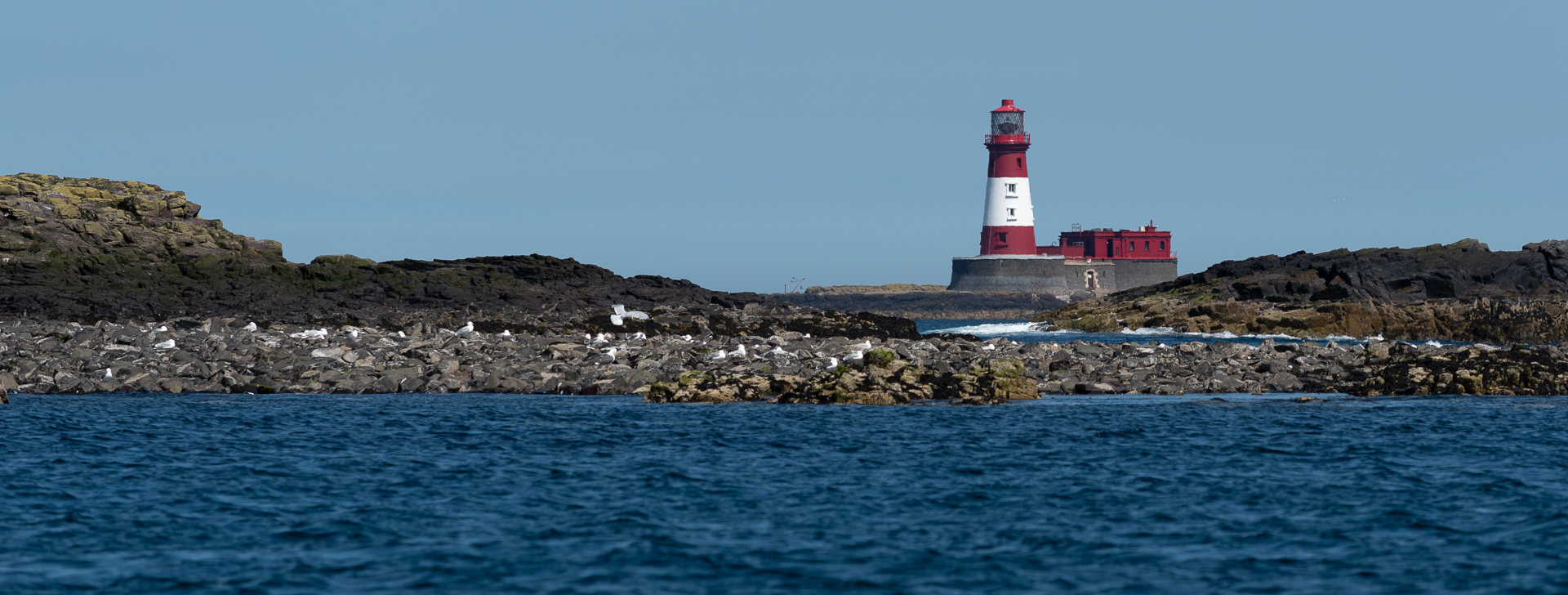
The Longstone lighthouse was lit by rotating Argand lamps with 12 burners, parabolic reflectors 21 inches in diameter and nine inches deep and a catadioptric optical apparatus. William Darling retired in 1860 and his son, another William took over until 1869. The lighthouse continued to be manned until September 1990, when it was converted to automatic operation, but nothing it experienced matched the events of the 7th September 1838.
The steamship Forfarshire left Hull on 5th September 1838 headed for Dundee. It was a fine ship with four staterooms and a number of elegant cabins and the passengers were no doubt enjoying their voyage until a storm brewed up. Unfortunately, the Forfarshire was plagued by maintenance issues. During the night, the ship’s boilers began to leak and despite repair attempts by the crew, the leaks became worse. By 11 pm the following night the boilers had failed completely, forcing the Captain, John Humble, to stop the engines. The Forfarshire began to drift, buffeted by the ferocious gale-force winds that had begun to blow. The Forfarshire was unable to cope with the gigantic waves and Captain Humble tried to head for shelter but mistook the Farne Island lighthouse for the Longstone. At 3 am the ship hit the Big Harcar Rock (also known locally as Hawkers Rocks) in the Farne Islands in view of the Longstone lighthouse.
At first light, William Darling deemed the sea too rough to attempt a rescue but his daughter, Grace, persuaded him to try and the two of them set out on their perilous rescue mission. They rowed for a mile in a small open wooden boat to reach the survivors. They managed to bring four men and one woman to safety and then Grace stayed in the lighthouse to help her mother care for the people they had saved. William with other lifeboatmen managed to rescue a further four. In all, forty-three passengers and crew drowned. It was due to Grace’s bravery that any survived. All nine survivors had to be accommodated and fed at the lighthouse for two days until the storm abated and they could be taken to the mainland.
It was a story with great public appeal, but it was thanks to there being a young queen on the throne that it went, so to speak, viral. Grace was showered with awards and gifts, for example the Royal Humane Society gold medal and the RNLI medal for bravery. The Government made them a grant, and a public subscription was organised. Grace herself received £729 – a huge amount at the time – her father £175 and the lifeboatmen £23 each. Members of the public begged for mementoes: scraps of Grace’s dress or hair, the latter proving so popular that she was forced to buy a wig! Songs, ballads and displays celebrated Grace’s deed. Grace-themed collectables were everywhere and her name was used to sell many different products.
Grace herself seems not to have let all this go to her head. She said: ‘They call me a heroine, but I am only an ordinary girl who did what had to be done’. Sadly, she died young, of tuberculosis in 1842, and Queen Victoria contributed £20 towards her elaborately-carved tomb.
Today there is a Grace Darling Museum in Bamburgh, opened in 1938.
3 March 2026