A u3a lecture by Christine and James Rowley
You will probably have heard of William Cobbett but, unless you have read his best-known book ‘Rural Rides’, you may not know that he was a local lad, born in Farnham, and that his rural rides were mostly around Hampshire. You may also not know what an unusual character he was and what an interesting life he led. During his life he was a farm labourer, soldier, radical activist, prolific pamphleteer, prisoner, farmer and politician.
He promulgated his ideas through his paper ‘The Register’ and through his many pamphlets. Some of the causes he espoused were a better deal for rural workers, universal suffrage, parliamentary reform and a welfare state. His bugbears included the expansion of cities, tax collectors, farm machinery and paper money to name just a few!
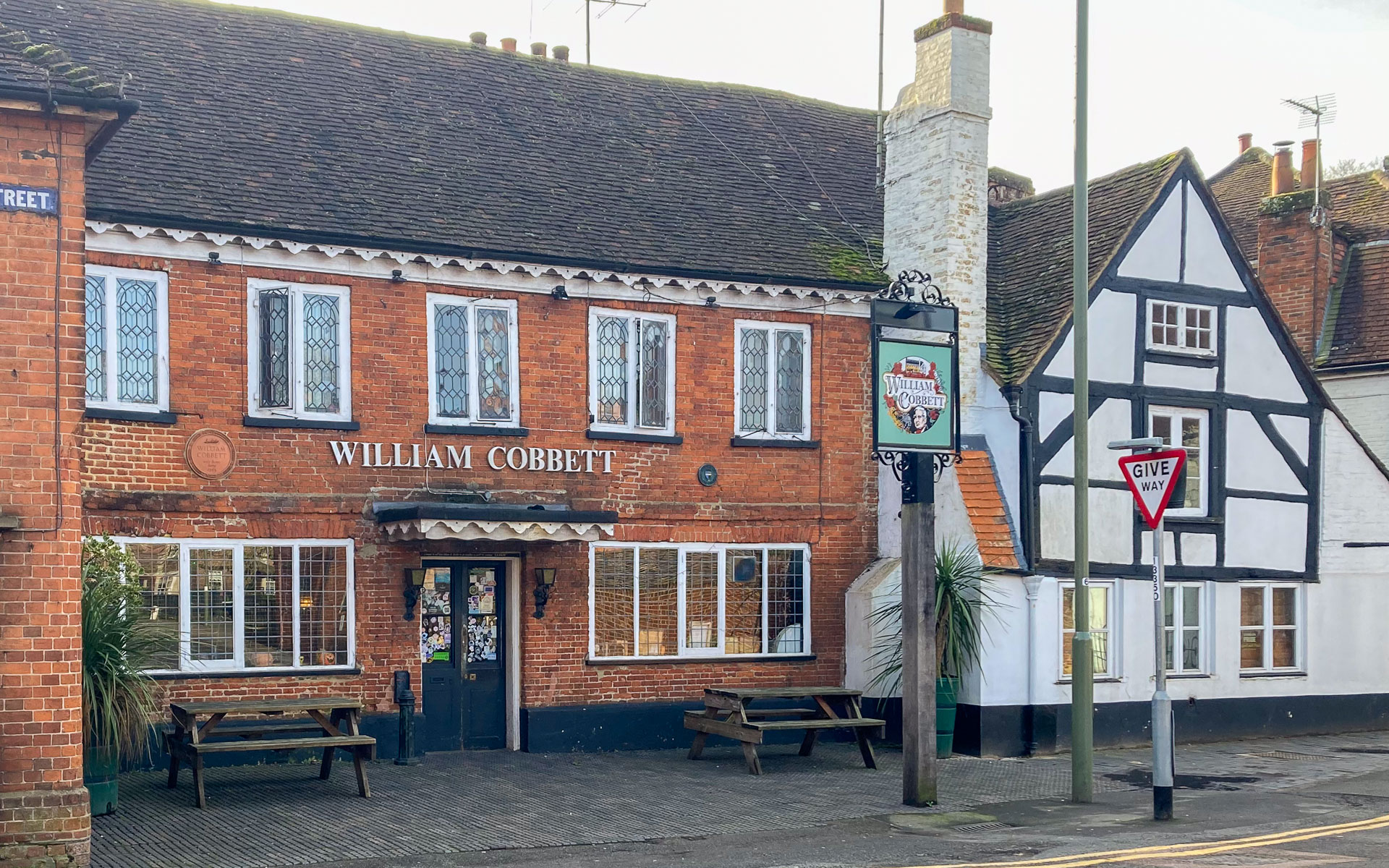
Cobbett was born at his father’s pub, the Jolly Farmer (now called the Wiliam Cobbett). He started work as a farm labourer while still a child which may have formed his lifelong interest in the plight of rural workers. Aged 20, he moved to London and escaped his hated job as a clerk by joining the army. Rising in the ranks, Cobbett was stationed for eight years in Nova Scotia, Canada, he ended up a Regimental Sergeant Major and two years later published ‘The Soldier’s Friend’ an indictment of the army.
Back in England, Cobbett became a farmer in Botley where he lived with his wife, Ann, and seven children. Unfortunately, he went bankrupt and lost the farmhouse but continued to be based in Hampshire. His activism eventually led to him being arrested for sedition and spending two years in Newgate prison during which time, of course, he continued to write and publish pamphlets.
The Rural Rides took place with his son from 1822 to 1826, each one published individually and then together in book form in 1830. The rides described places familiar to the u3a audience such as Laverstoke Mill, Winchester and Hurstbourne Tarrant (known to residents of the time as Uphusband). The book gives a vivid description of the early nineteenth century countryside and its people with particular reference to rural hardship.
In later life, Cobbett became involved in politics, exposing political corruption and being responsible for the institution of Hansard. In 1832 he was elected MP for Oldham and re-elected in 1835.
In 1835, William Cobbett died. 8,000 people attended his funeral in Farnham (more than the population of Farnham at the time!).
November 2025