Hartley Wintney u3a 2025 Holiday Report
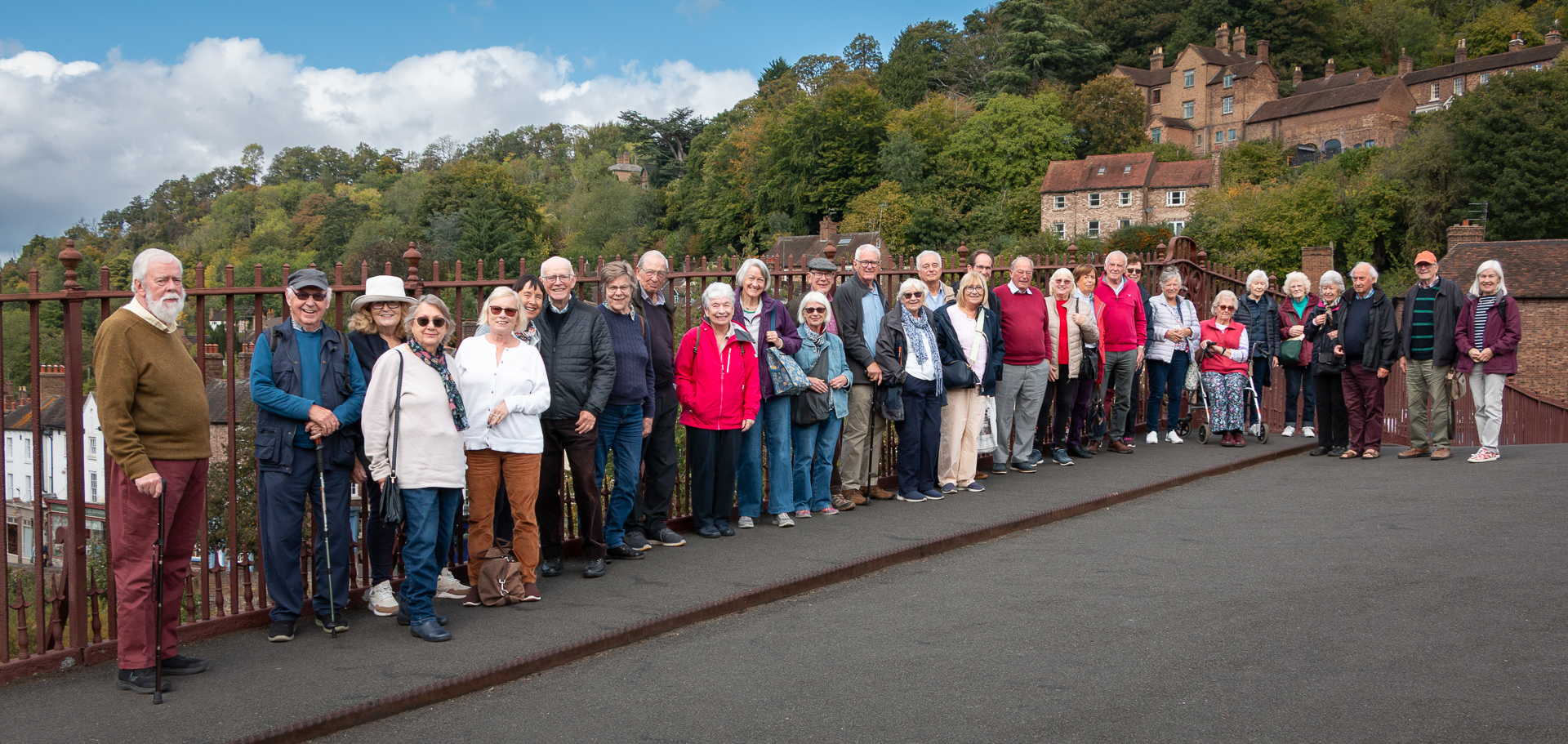
The 2025 Holiday Group on the famous Iron Bridge
Sunday
Departure
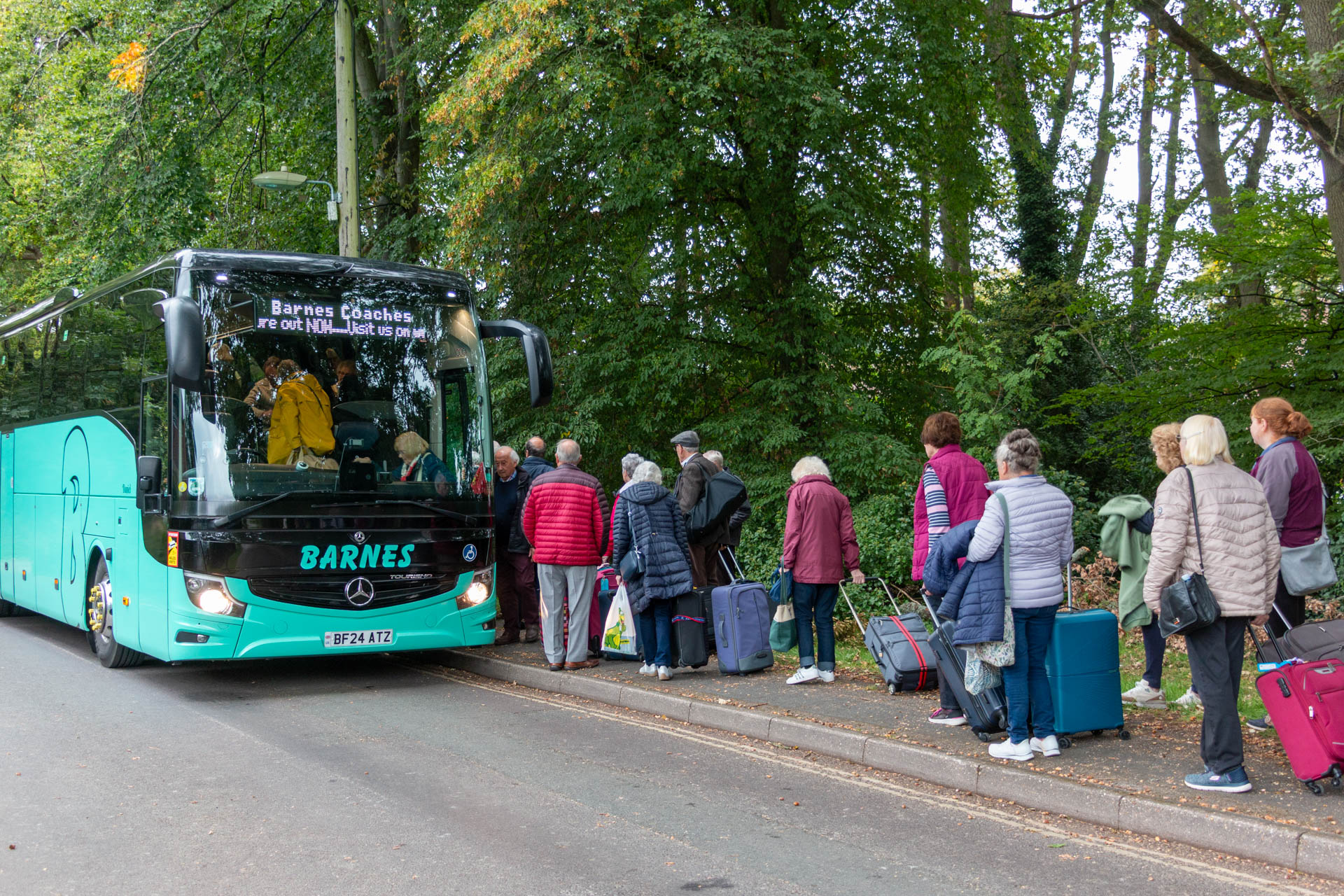
Our competent and cheerful driver Sarah welcomed us aboard her new coach on Sunday morning for a prompt start.
Notes
- If you click on this picture (or any of the others below) you will be able to see it as large as your device will display it. The images in each gallery may appear cropped. Clicking on them will also show the entire image.
- Links to websites relating to places visited open in a new window,
Chedworth Roman Villa
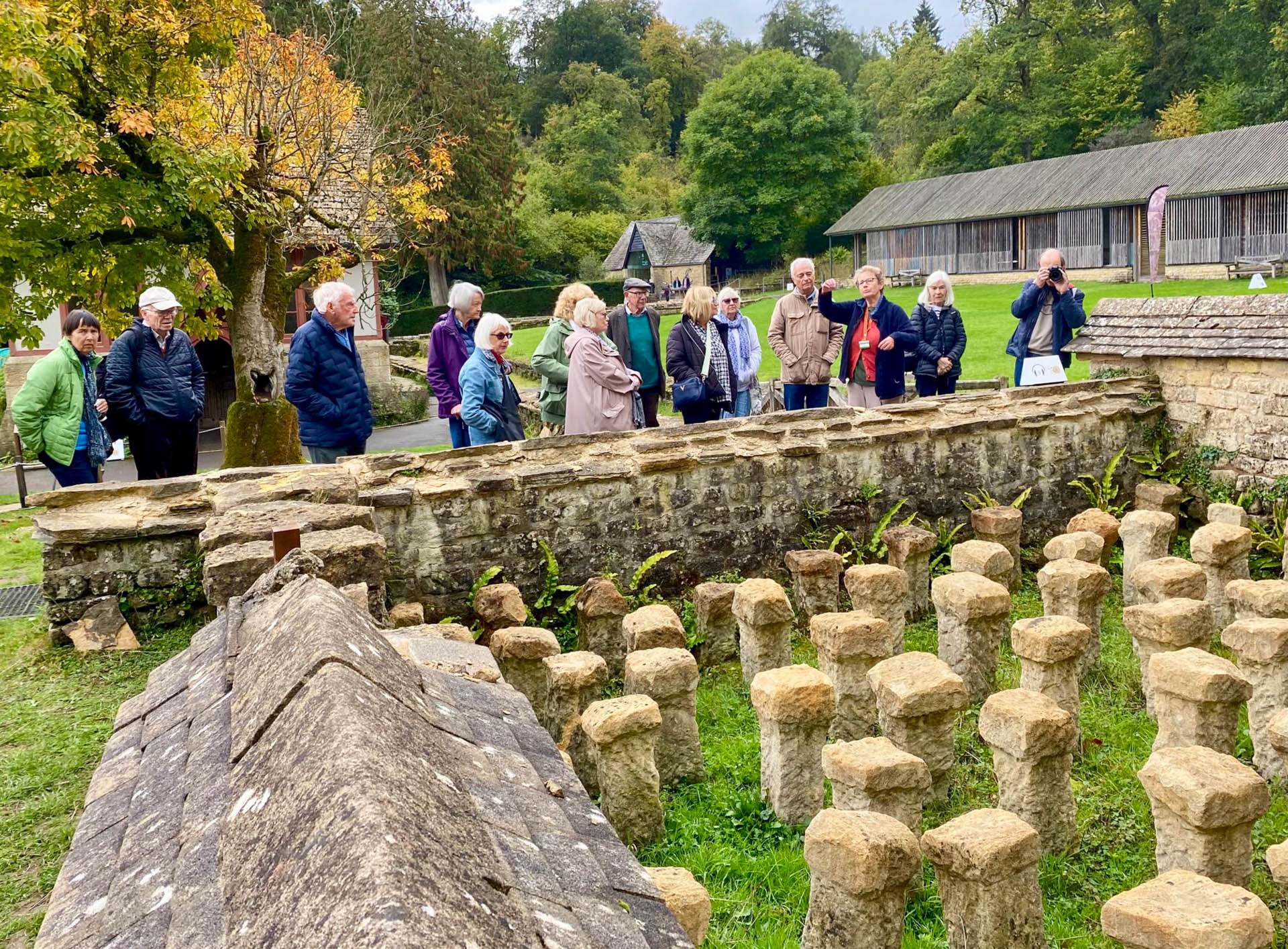
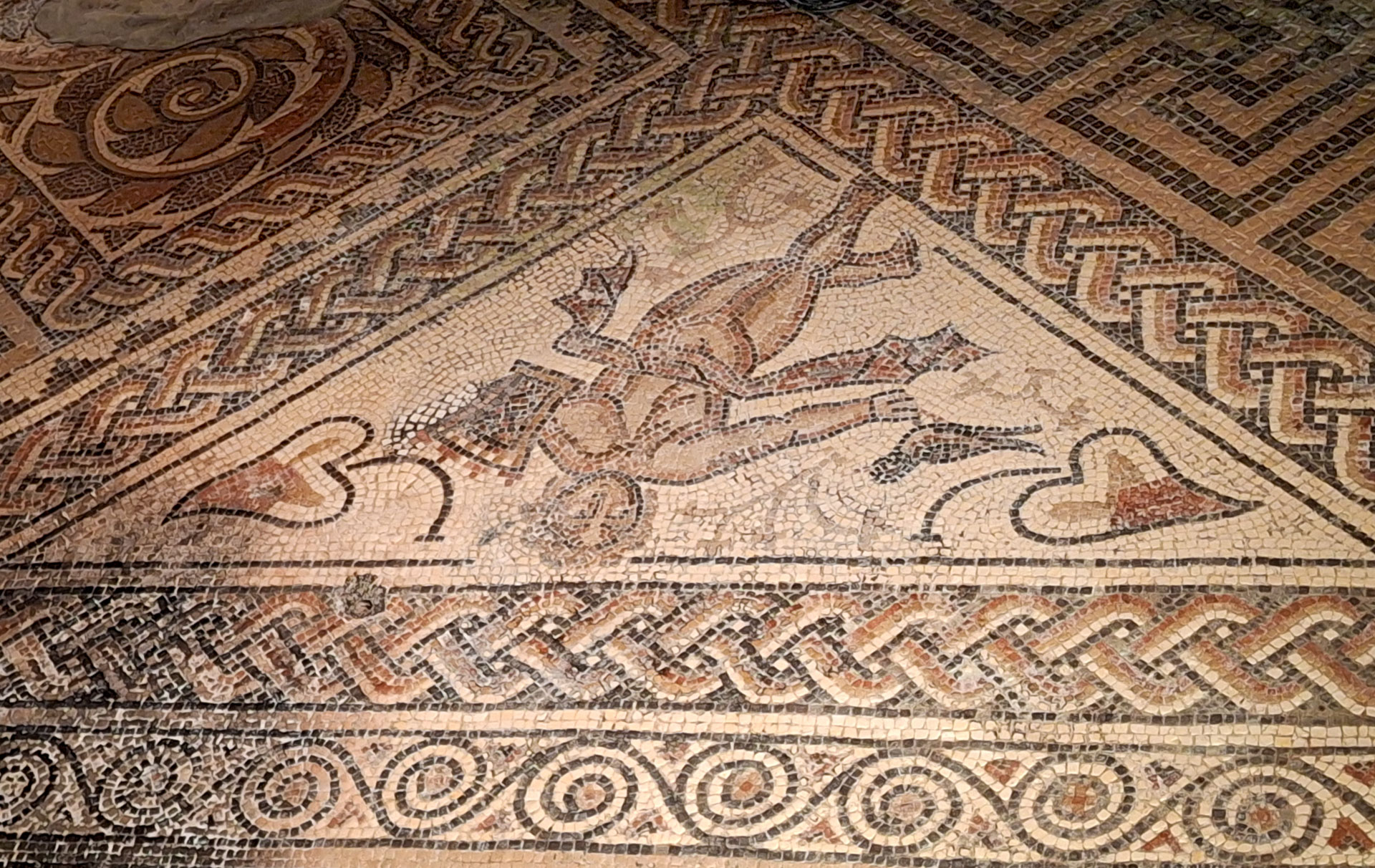
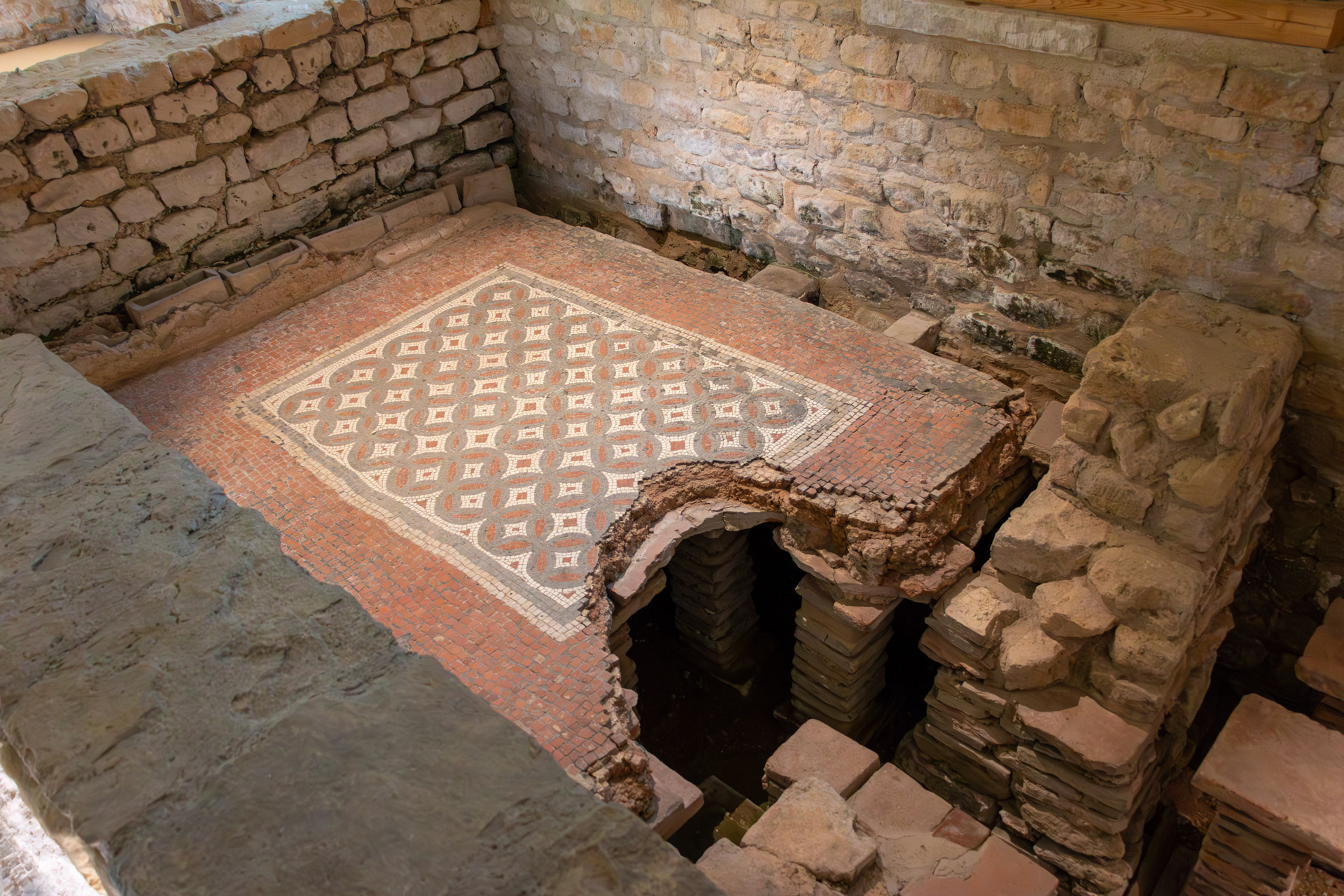
First stop was Chedworth Roman Villa which has some of the most impressive in-situ Roman mosaics in the country and gives an insight into the history of Roman Britain. Our excellent guide, who had taken part in some of the more recent excavations, explained the original high status Saxon farm settlement. Taken over peacefully after the AD 43 invasion, it became a Roman country estate, complete with bathhouse, a probable Christian chapel near the pagan spring, and additional Roman accommodation. Going inside the modern conservation building we viewed the extensive mosaic floors, hypocaust systems and bath house rooms.


Stratford-upon-Avon
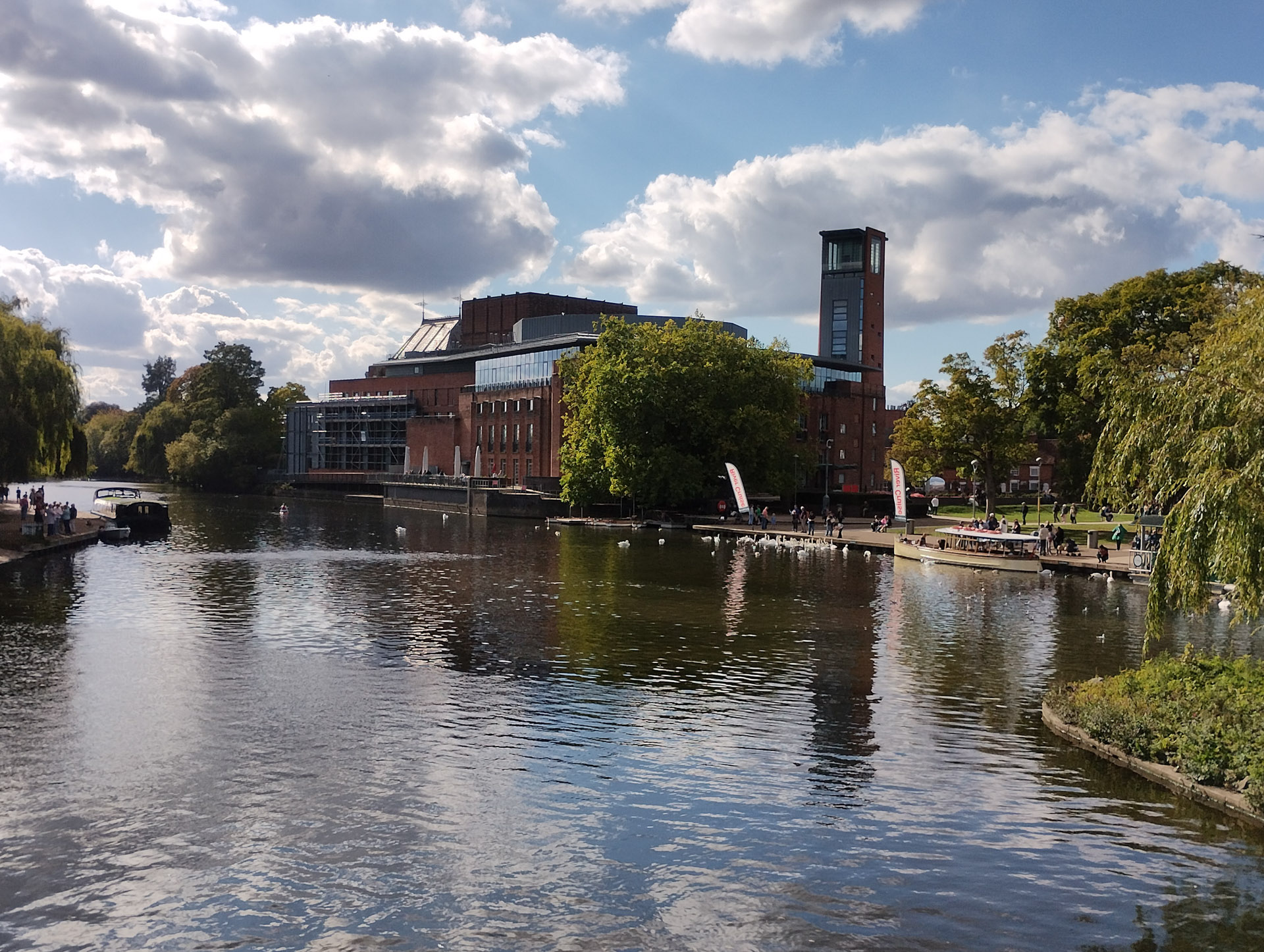
Going on to Stratford, while on a pleasant stroll through the town we passed Shakespeare’s birthplace, inspected the lively Sunday market stalls, and slightly envied the busy river traffic.
The hoped for Theatre tour could not take place as there was a matinee performance.


Shakespeare's birthplace
Hotel
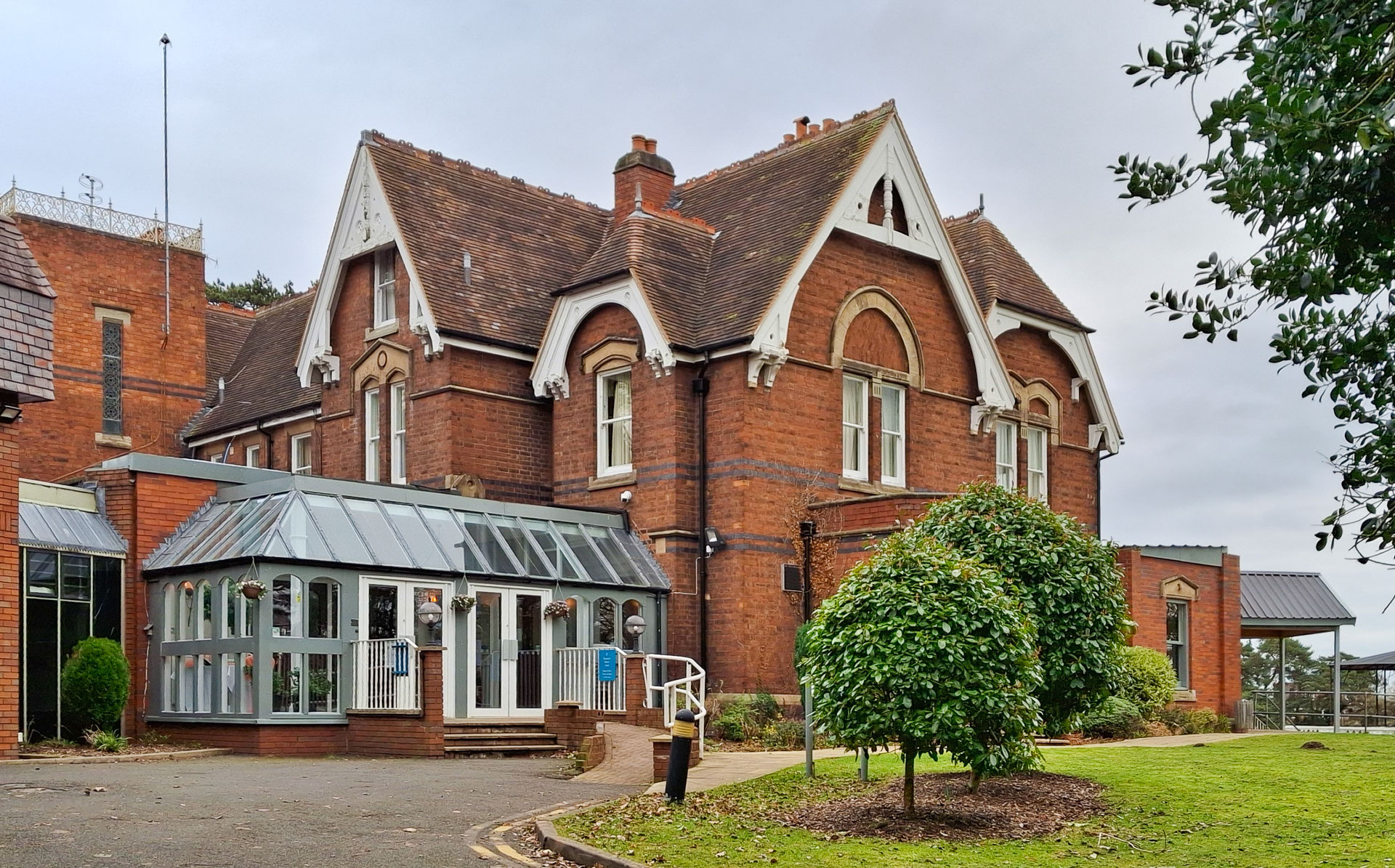
We arrived at the Stourport Manor Hotel late afternoon to settle in. The management had changed since being booked and they were slightly disorganised. However, we were warm and comfortable, and the staff did their best. At times the restaurant service was reminiscent of Fawlty Towers!
Monday
Black Country Museum
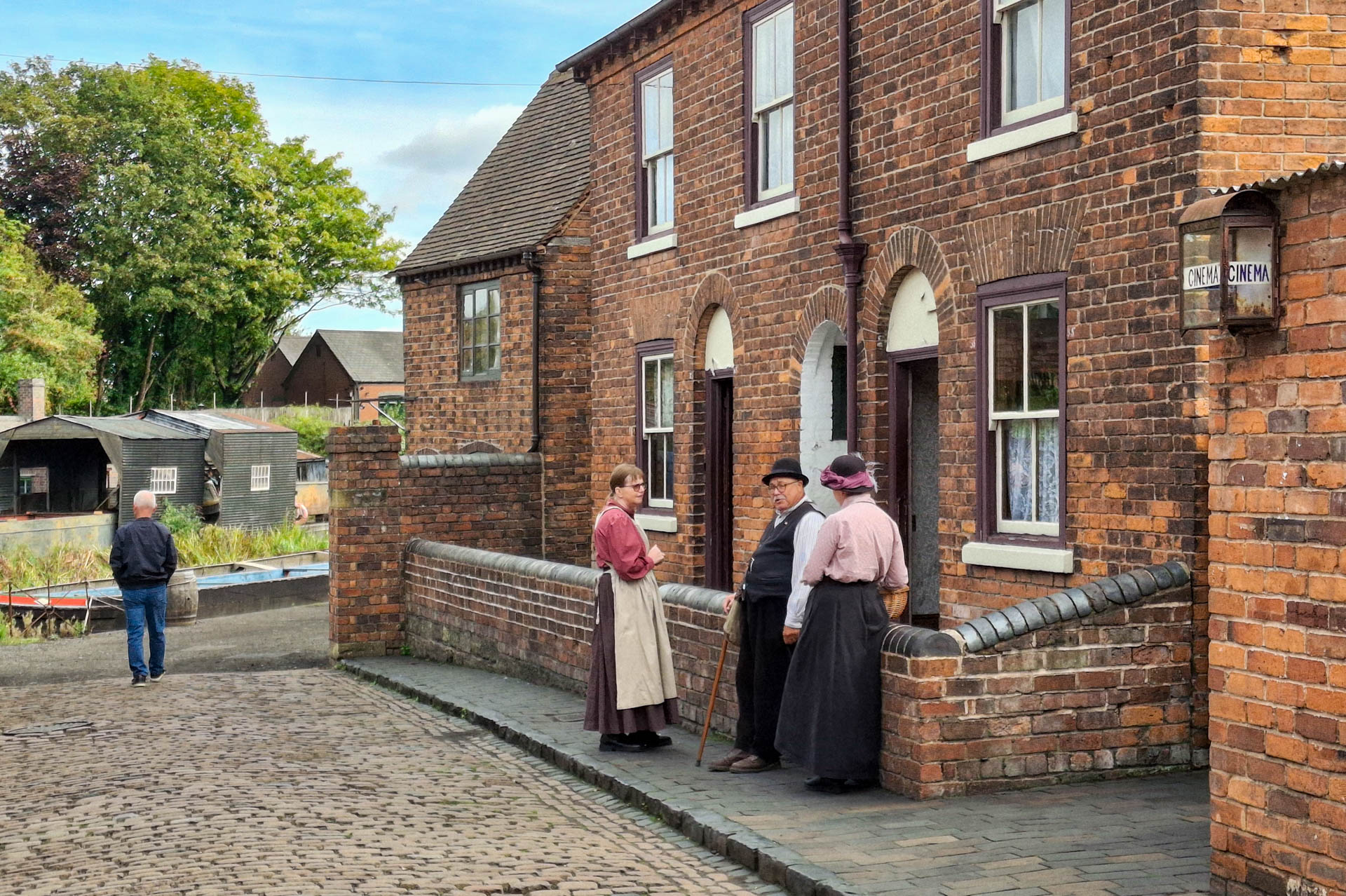
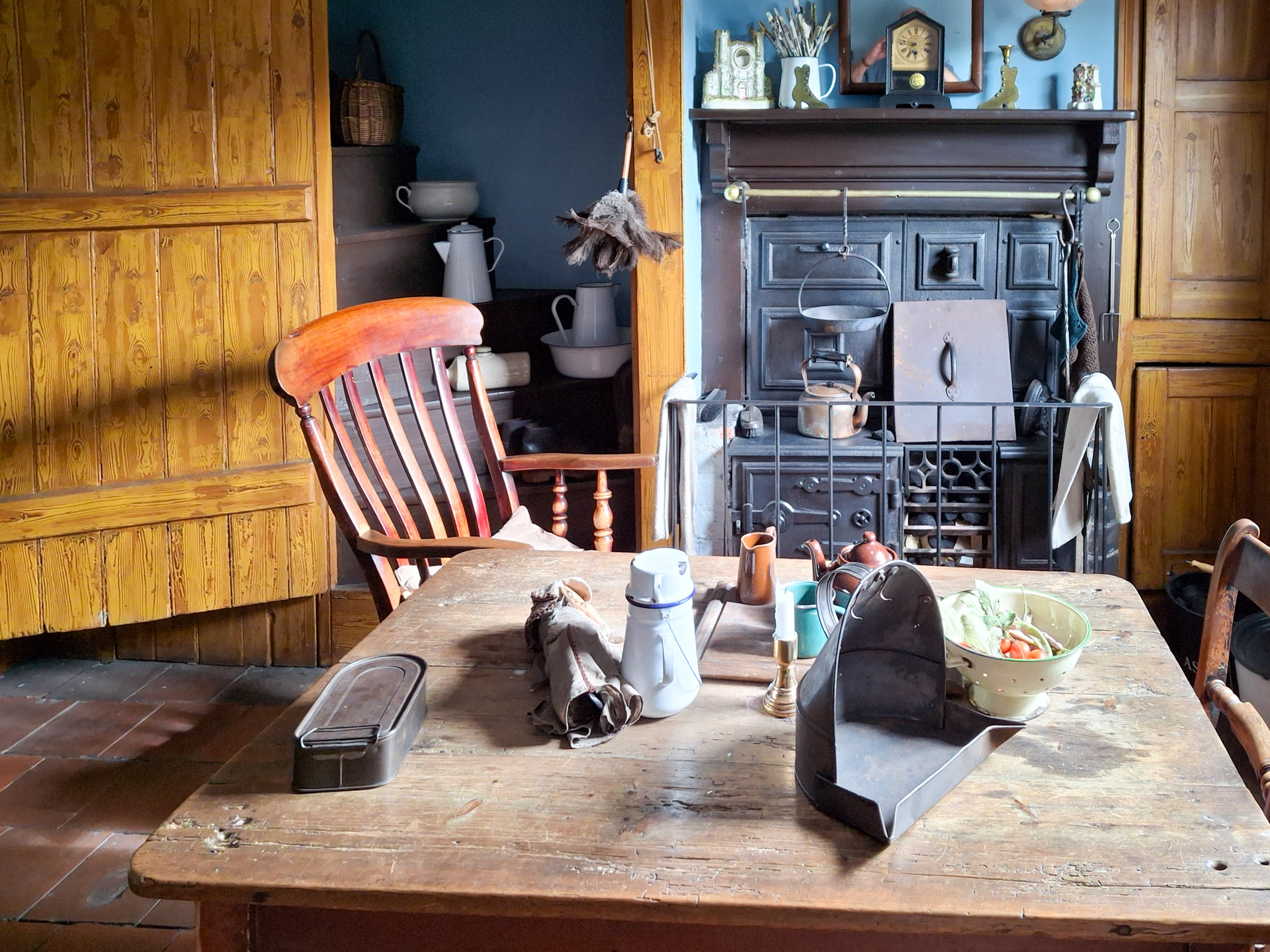
Starting at the vast Black Country Museum (which displays over 250 years of history, from the Industrial Revolution to post-war prosperity), not knowing what was afoot, some of us walked down into the shallow coal pit and were almost immediately thankful for the hard-hat protection, banging our heads on the lowering ceiling. There followed several equally powerful experiences: listening in complete darkness, crouching into and through mining areas, and being exposed to a thunderously realistic explosion to release a new seam of coal. It was a thoroughly live glimpse into the production of what for most of us had been the means of heating our childhood homes. There were people dressed up in period costumes ‘working’ in various small cottages, houses and shops. They brought a very authentic feel to our visit, and a reminder of what life was like during the last century. A West Bromwich Corporation 1952 Daimler double-decker bus trundled to and from the distant parts of the site, useful to take weary passengers back to the reception, some with goods from the various historic shops, or after necessary libations in the outlying pubs.



Dudley Canal
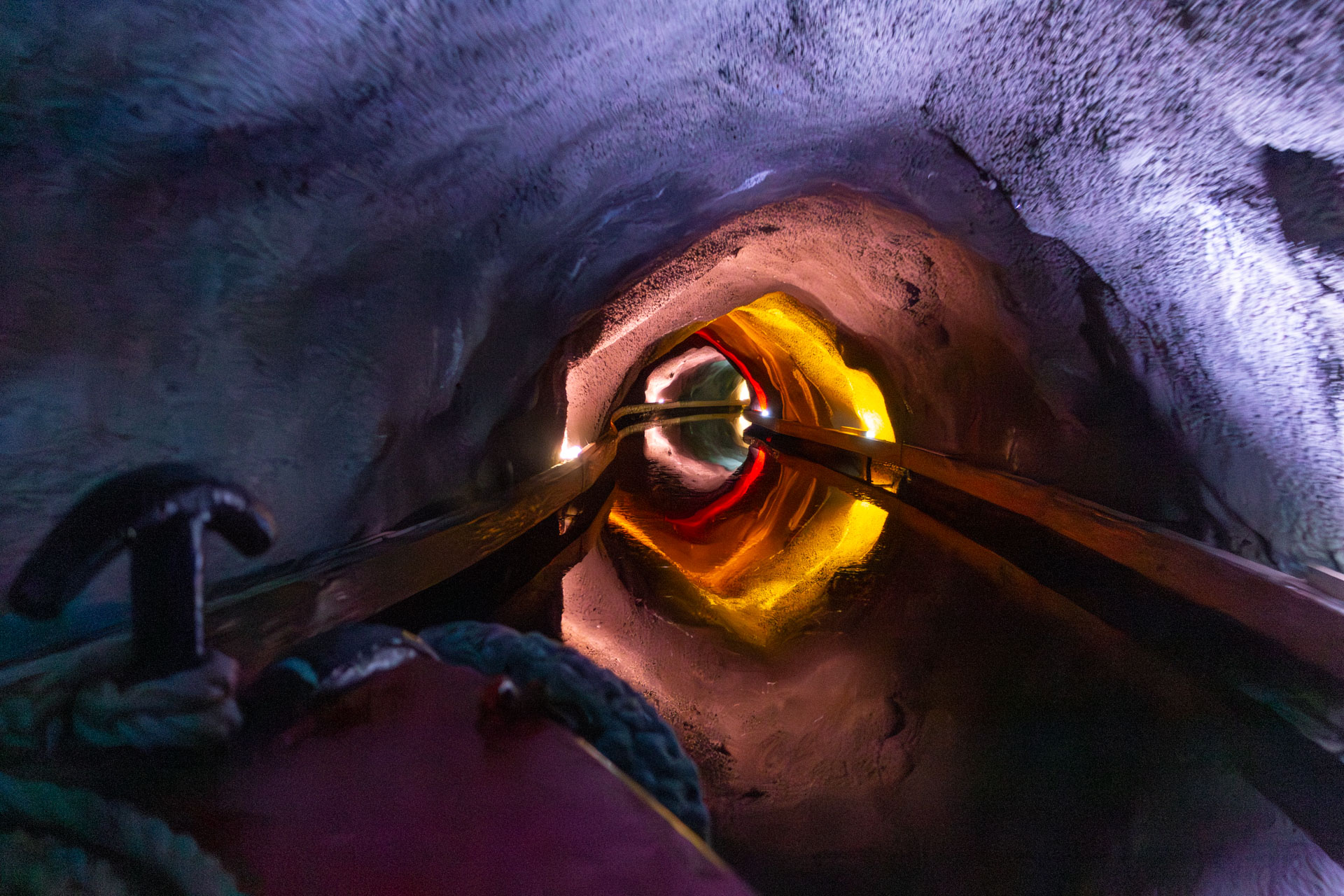
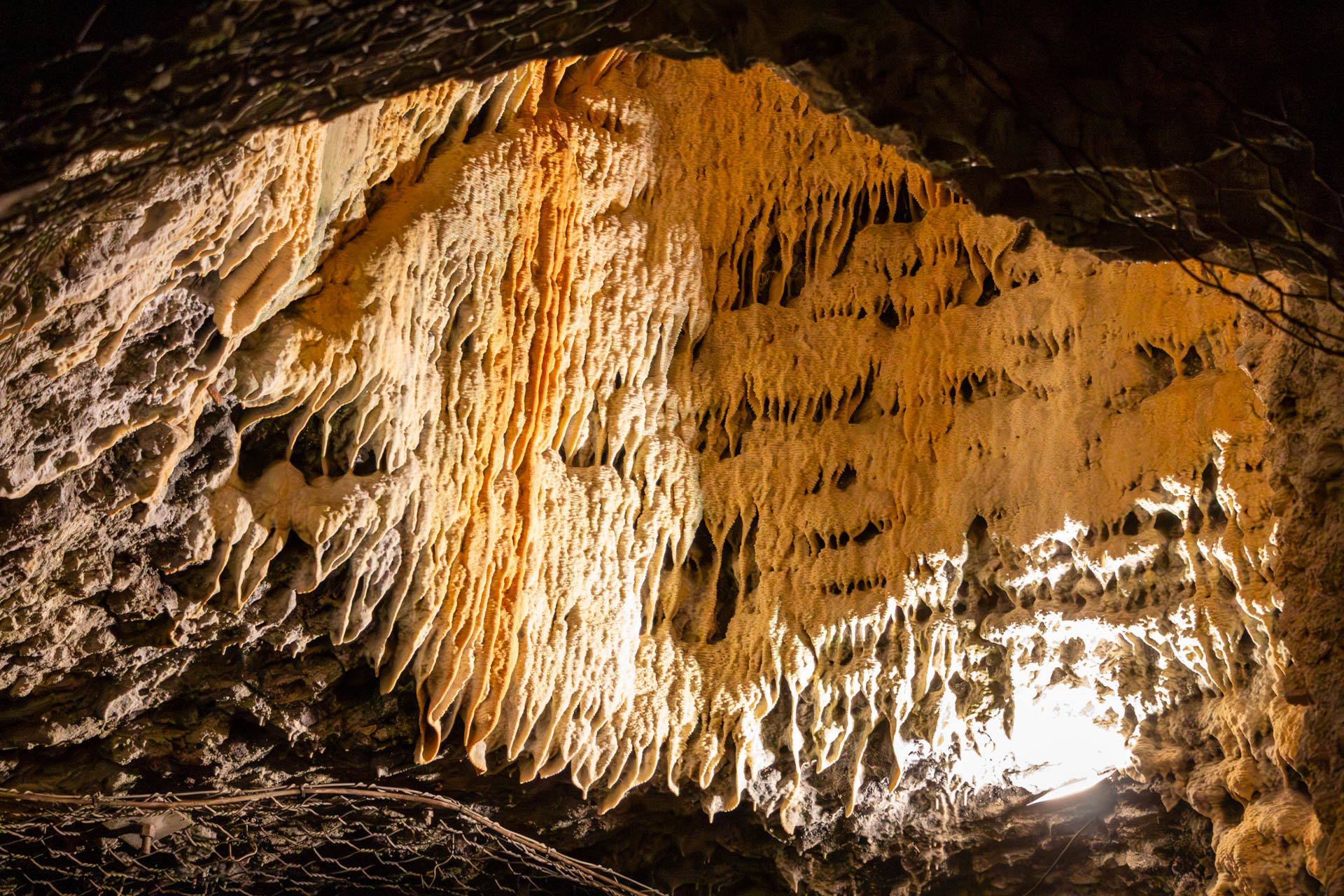
Retiring from the Old Town, we boarded a narrow boat on the Dudley canal which was built under a hill to mine and extract limestone. The informative and entertaining guide helped to make this another prized experience. Besides the hacking and blasting of limestone, loading into canal barges from open-air and underground pits, a parallel story was told about development in mining techniques. These included long narrow boats, pit worker Organisations/Unions, Social Clubs, and Brass Bands - the latter still notably active in the town.

Birmingham Botanical Gardens
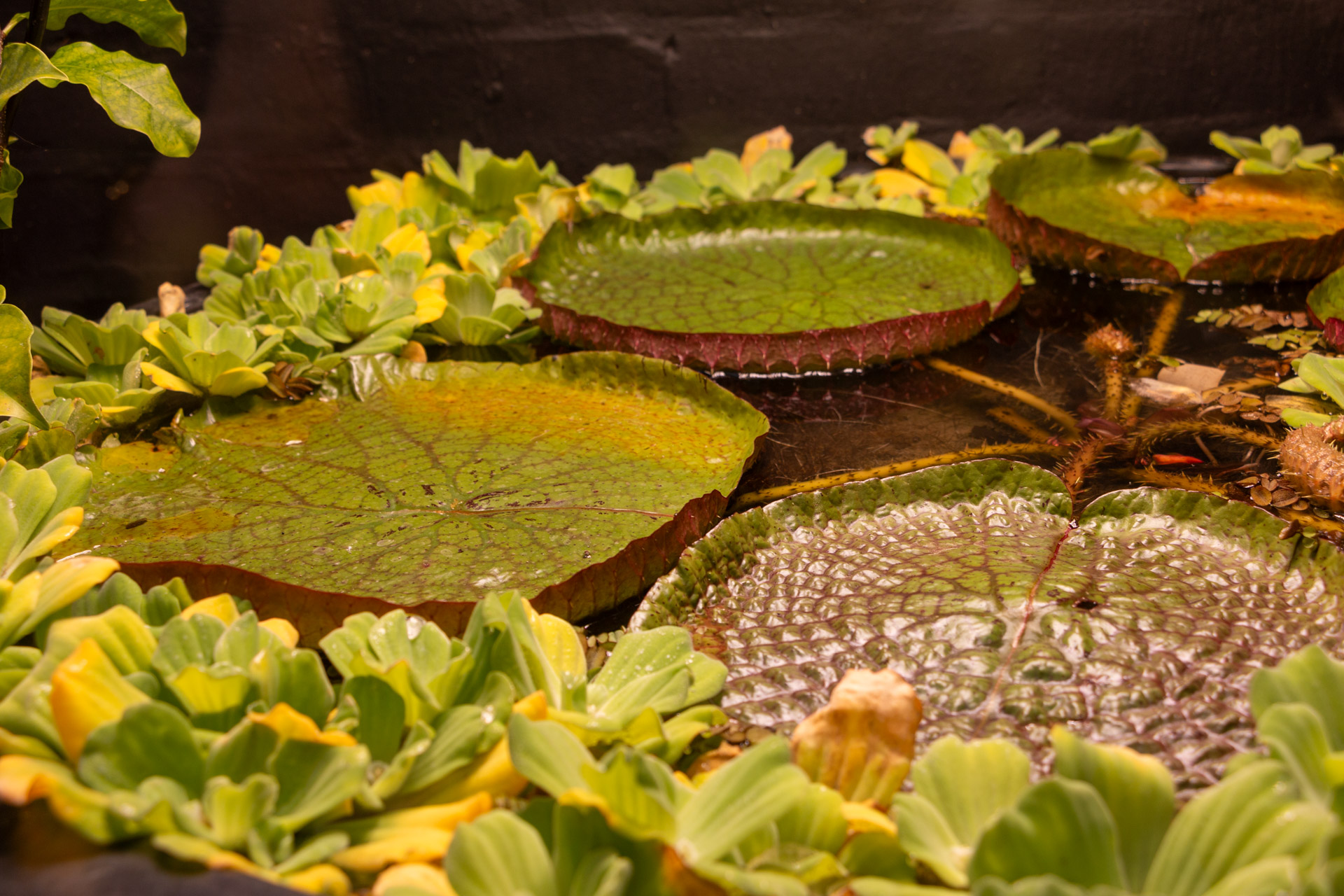
In late afternoon we arrived at the Birmingham Botanical Gardens, interestingly this area is in part of the Calthorpe (of Elvetham) estate. The Gardens are a delight with remarkable specimens in the long gallery of tropical plants. It was a shame it was at the end of a long day as it would have been pleasant to spend longer there. However, there was just time to enjoy tea.
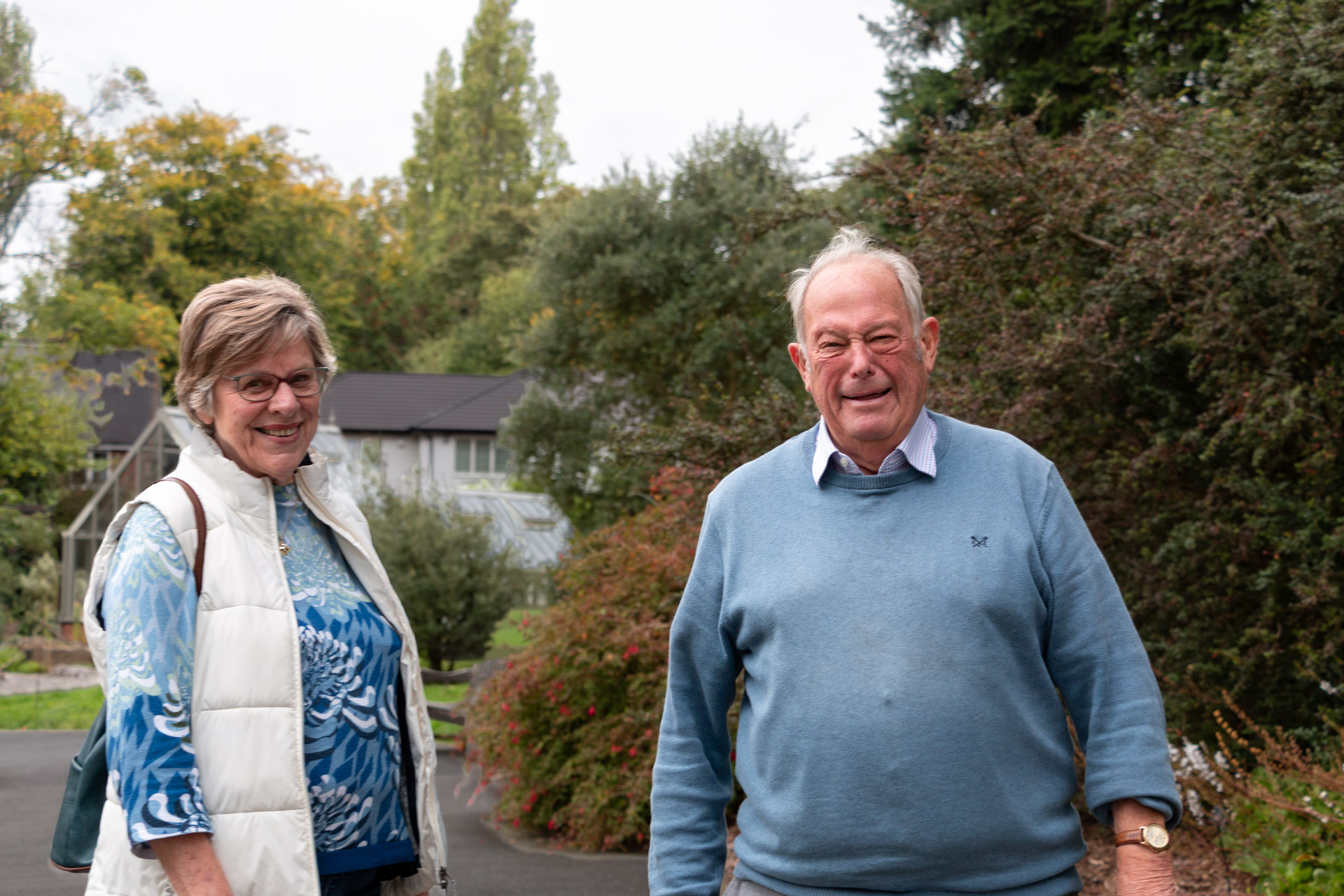

Tuesday
RAF Museum
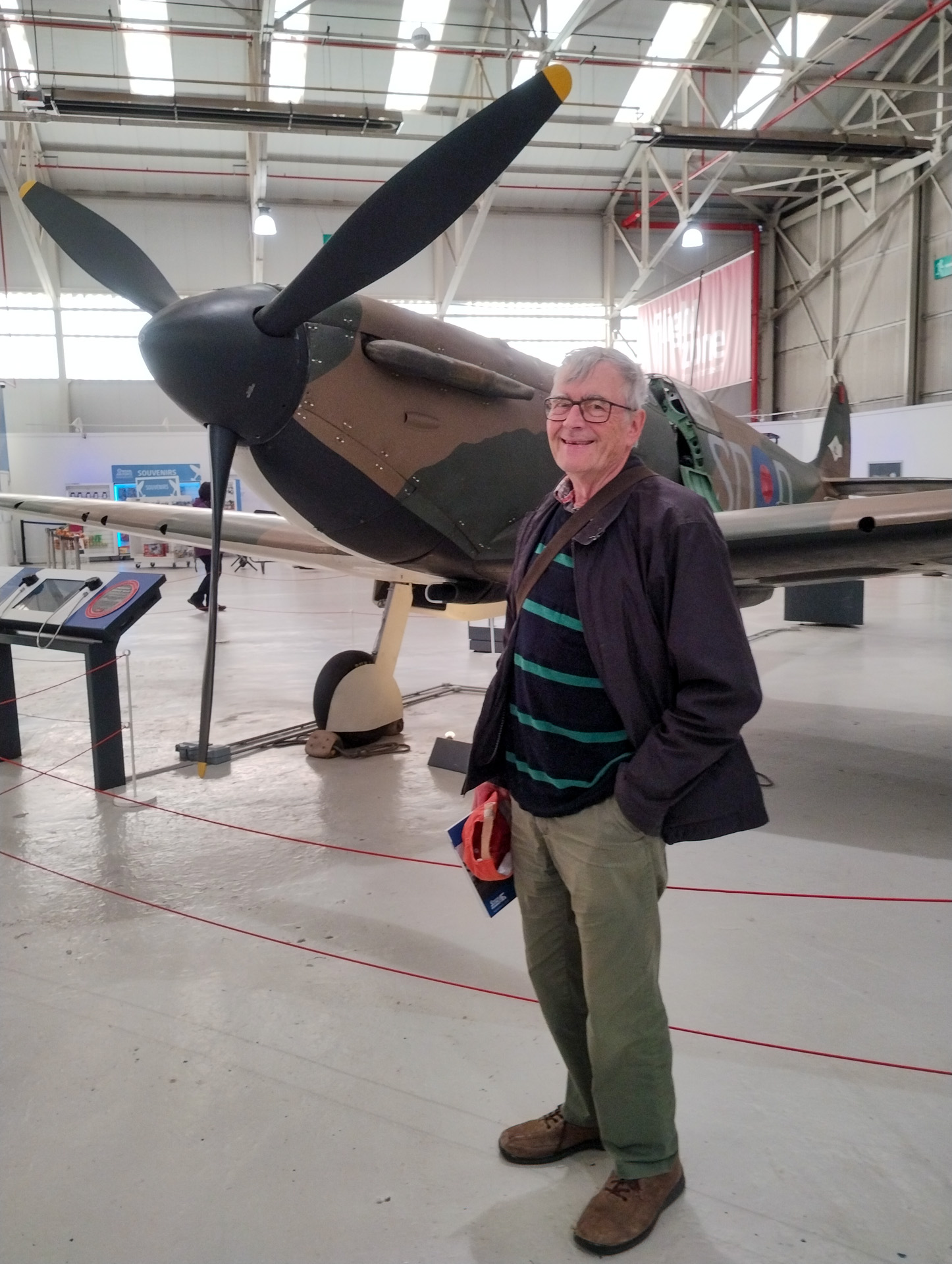
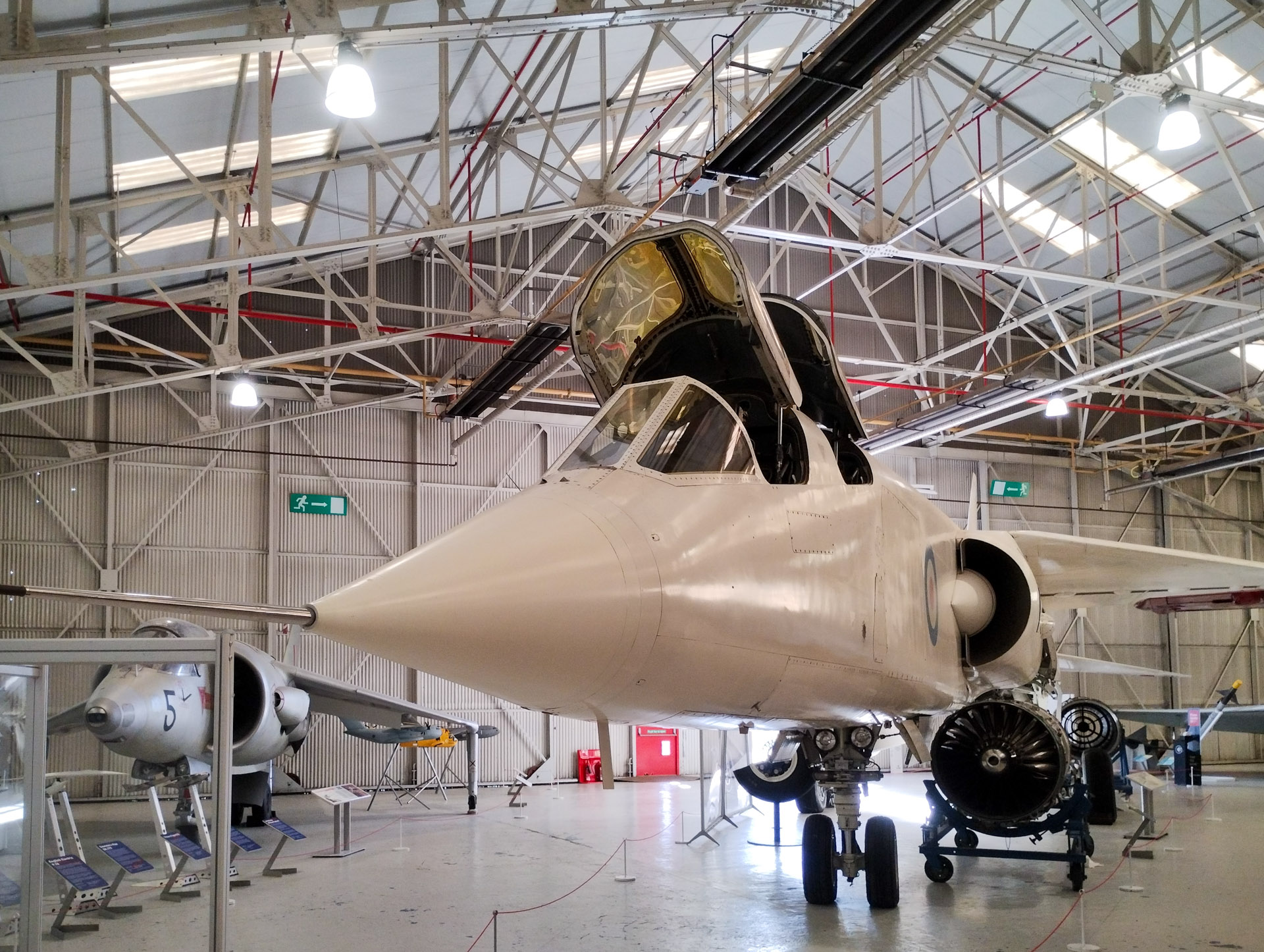
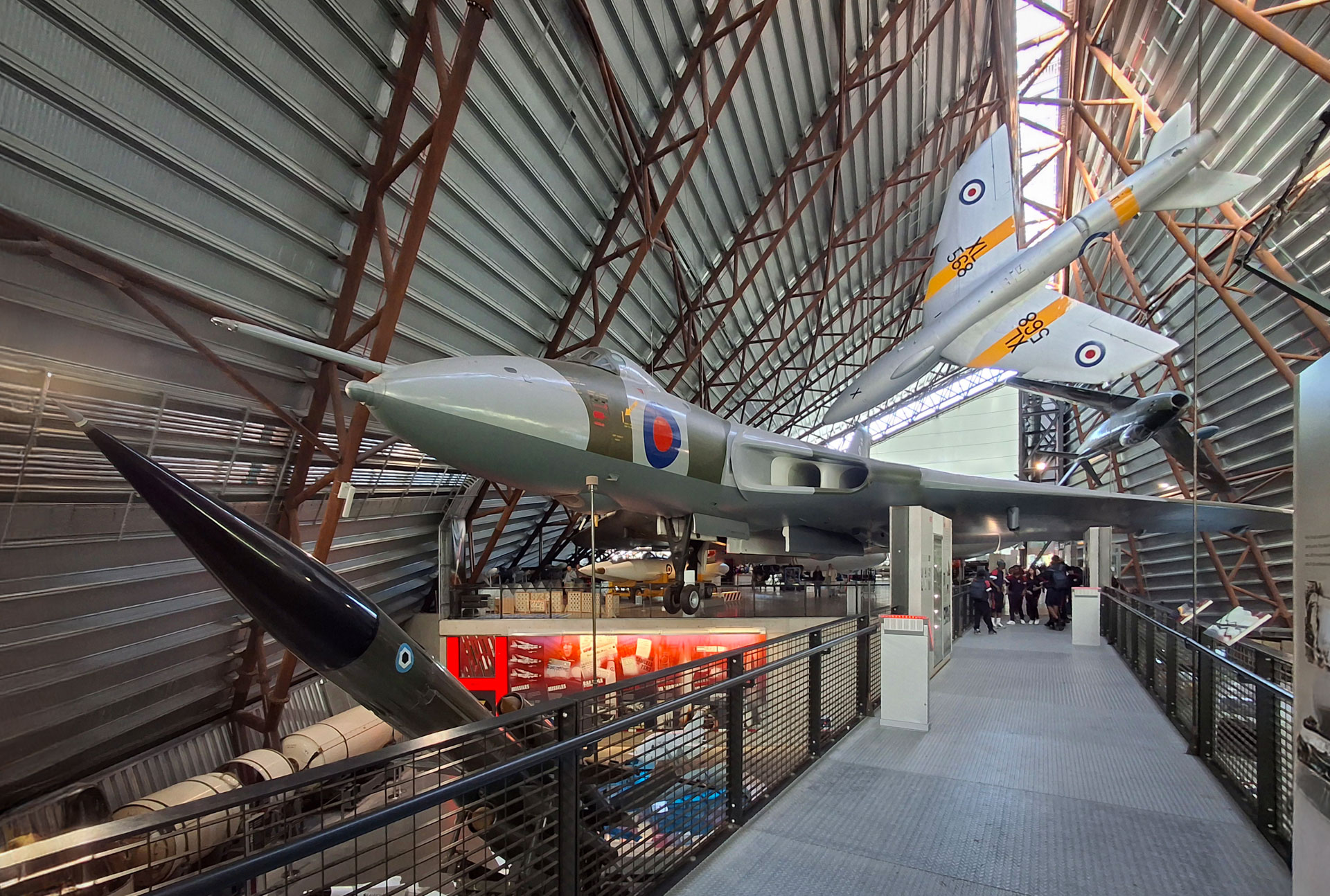
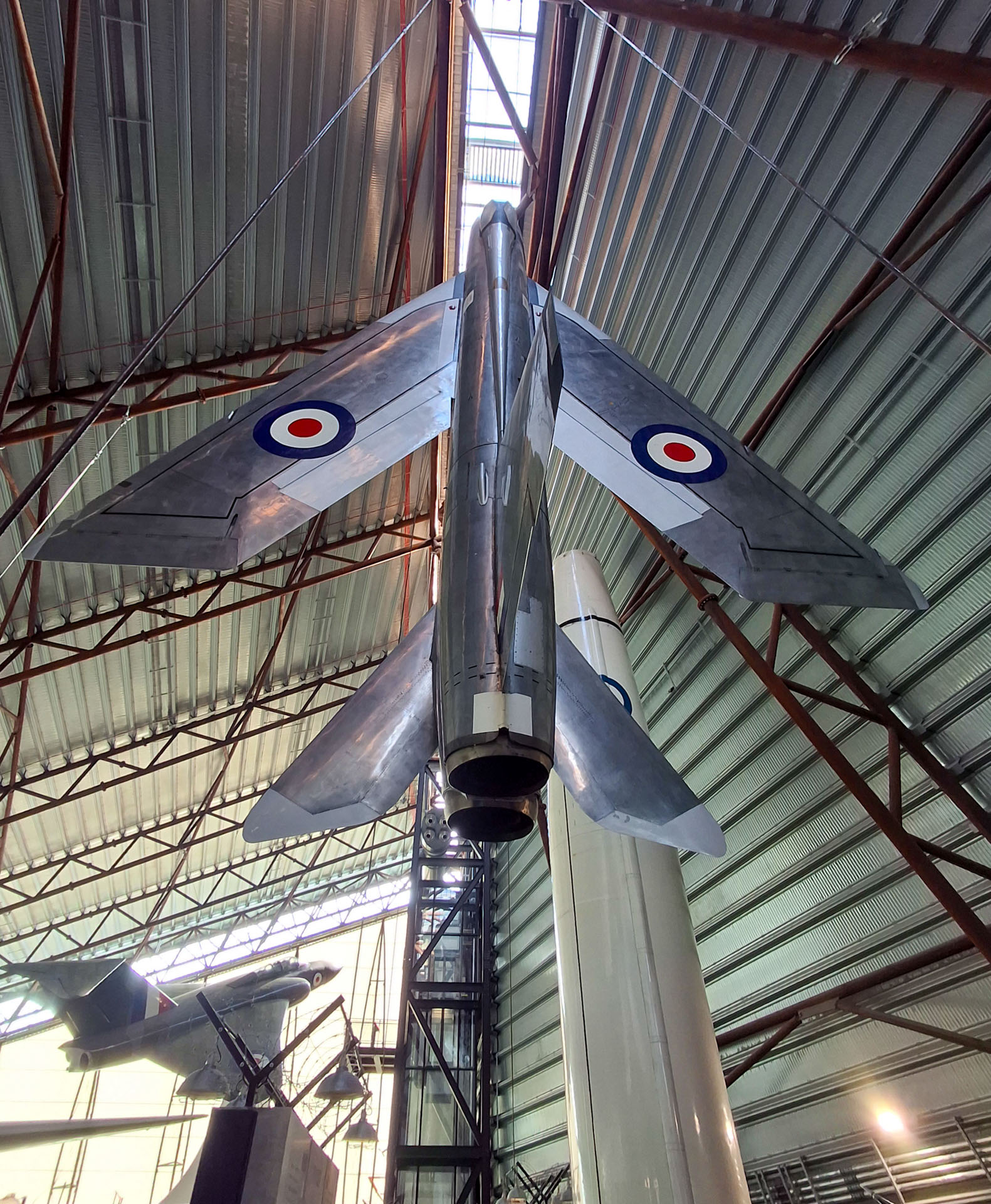
The Cosford RAF Museum was a real highlight for many. It involved a circular progression from the earliest powered flight, through early First World War fighter planes, to the nation-saving Hawker-Siddeley and Spitfire machines. Onwards and upwards, to the dreaded doodlebugs, V-II rockets, jets of increasing power and size, the ill-fated TSR2, and finally rockets exploring space near and far. The area dedicated to the Cold War was particularly significant for those of us who remember this time well. At the end there was a welcome tea-room pit-stop, before moving on to Ironbridge.

Ironbridge
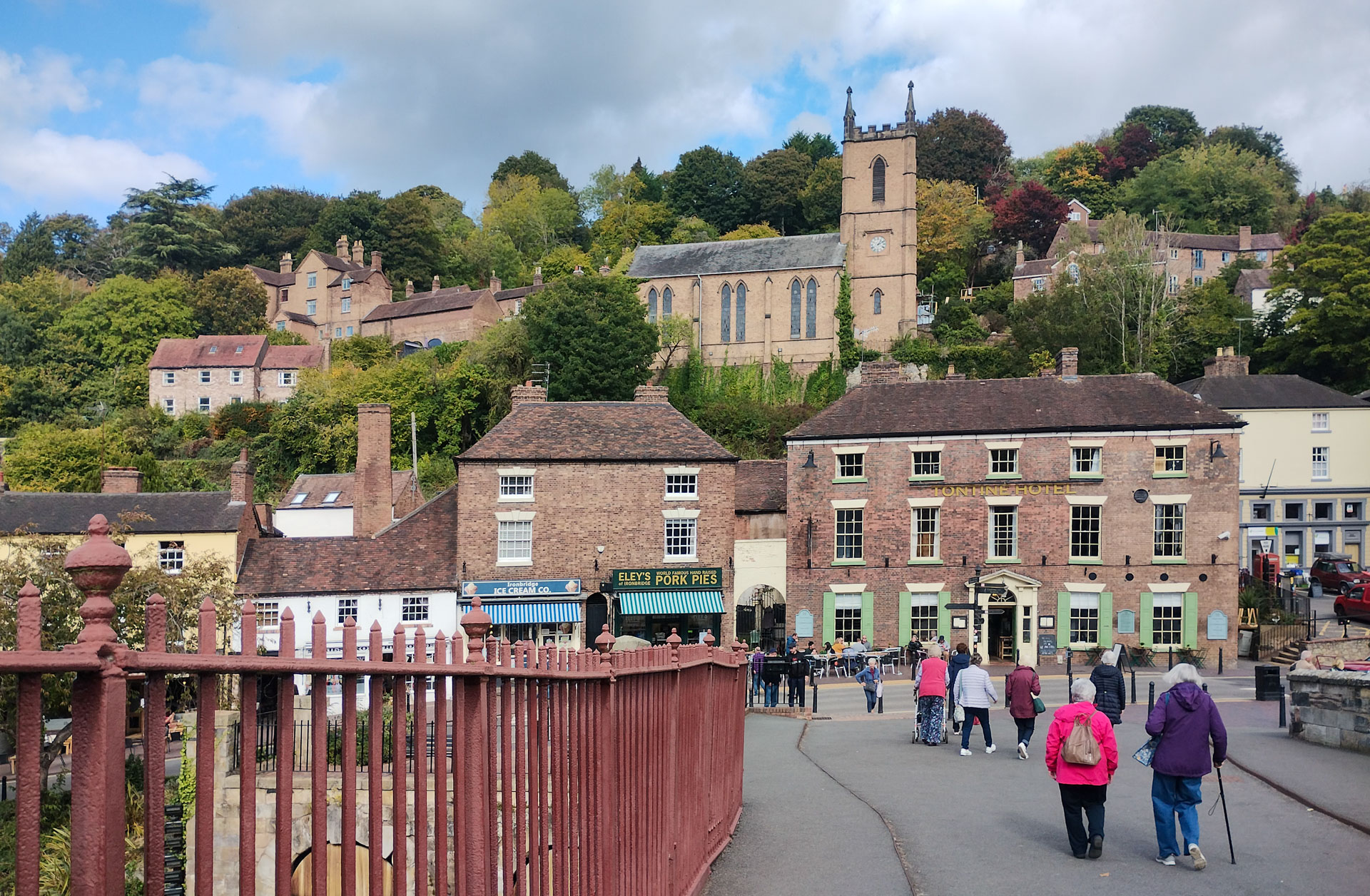
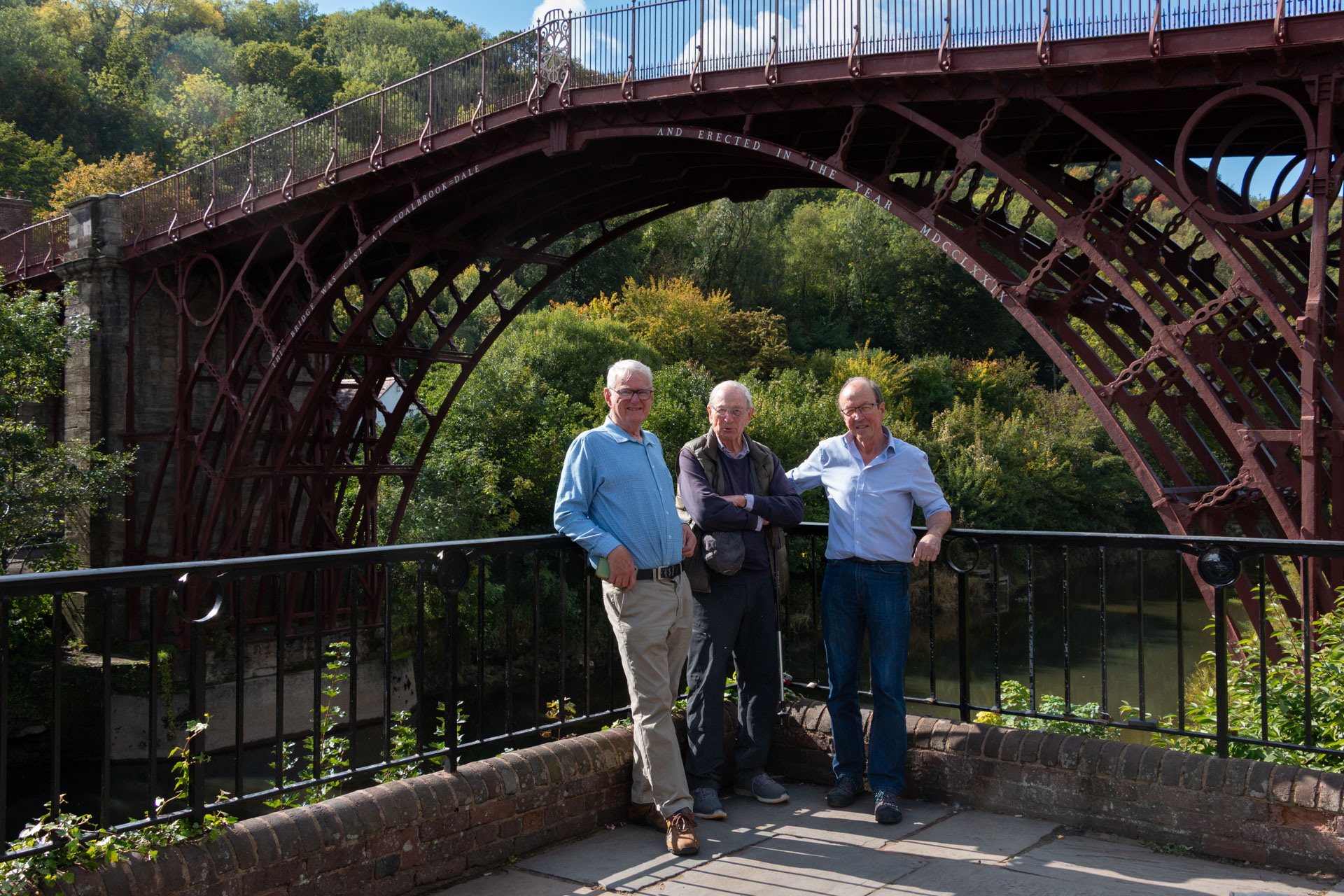
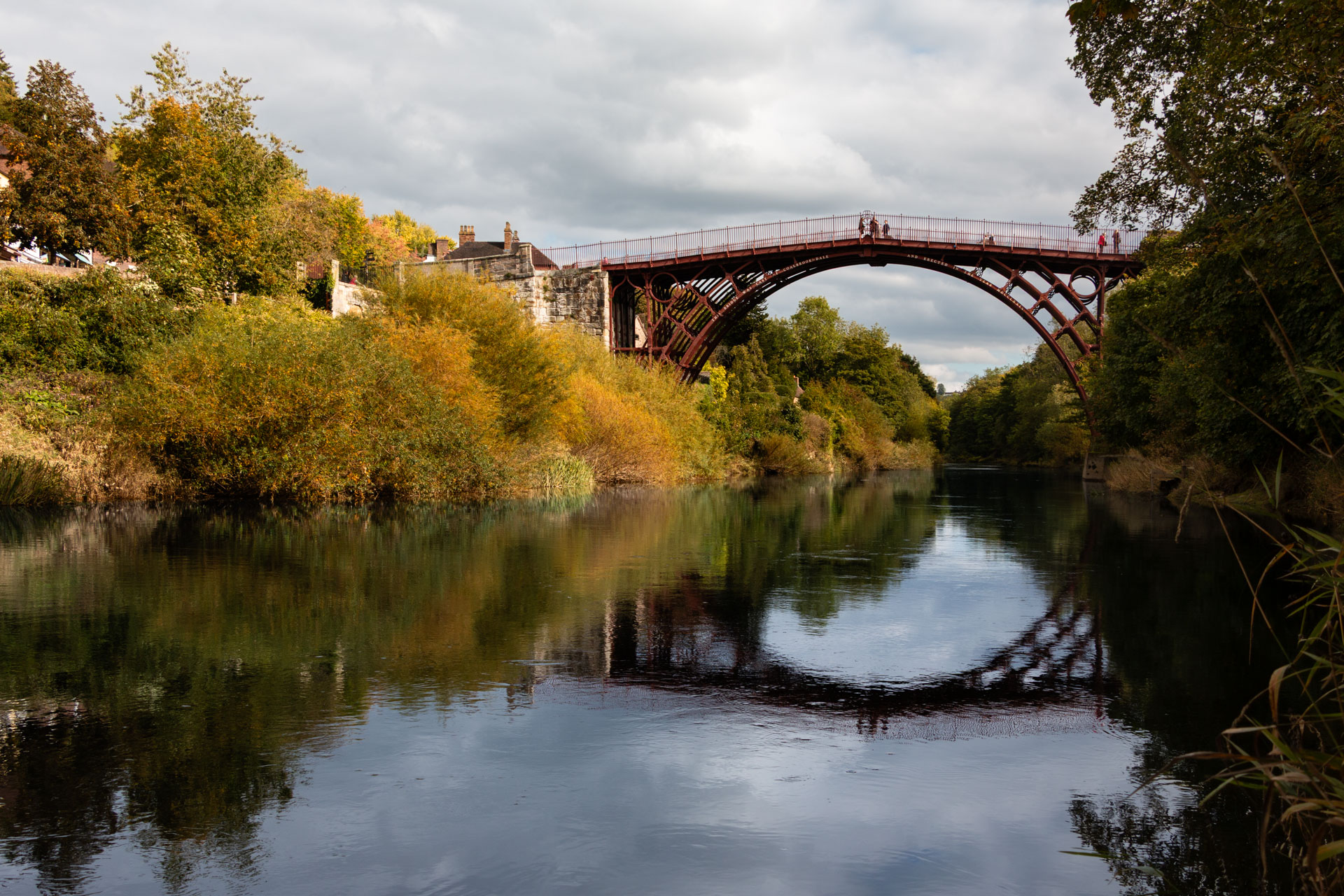
The world's first iron bridge was erected over the River Severn here in Shropshire in 1779. This bridge was so original that it gave its name to the spectacular wooded valley which surrounds it, now recognised as the Ironbridge Gorge World Heritage Site.
This visit was also a highlight to some. The bridge has an almost modern feel being set against a pleasant hillside ancient town, with good coffee and ice-cream, interesting shops, and pleasant river-side walk. Many of us walked up to the top of the town along the river. Some went across the river to get down to the actual water level for some more complete views and photographs of the Ironbridge itself, others nosed around the quaint bric-a-brac shops looking for bargains. The weather continued to be warm and sunny enough for coffee and cake on a terrace somewhere, so there was something for everyone.
Coalbrookdale Museum of Iron
The Coalbrookdale Museum of Iron displayed and explained the process of iron smelting from ancient times to modern iron production. This continued as it progressed through phases involving variation in carbon content and temperature, to steel manufacture.

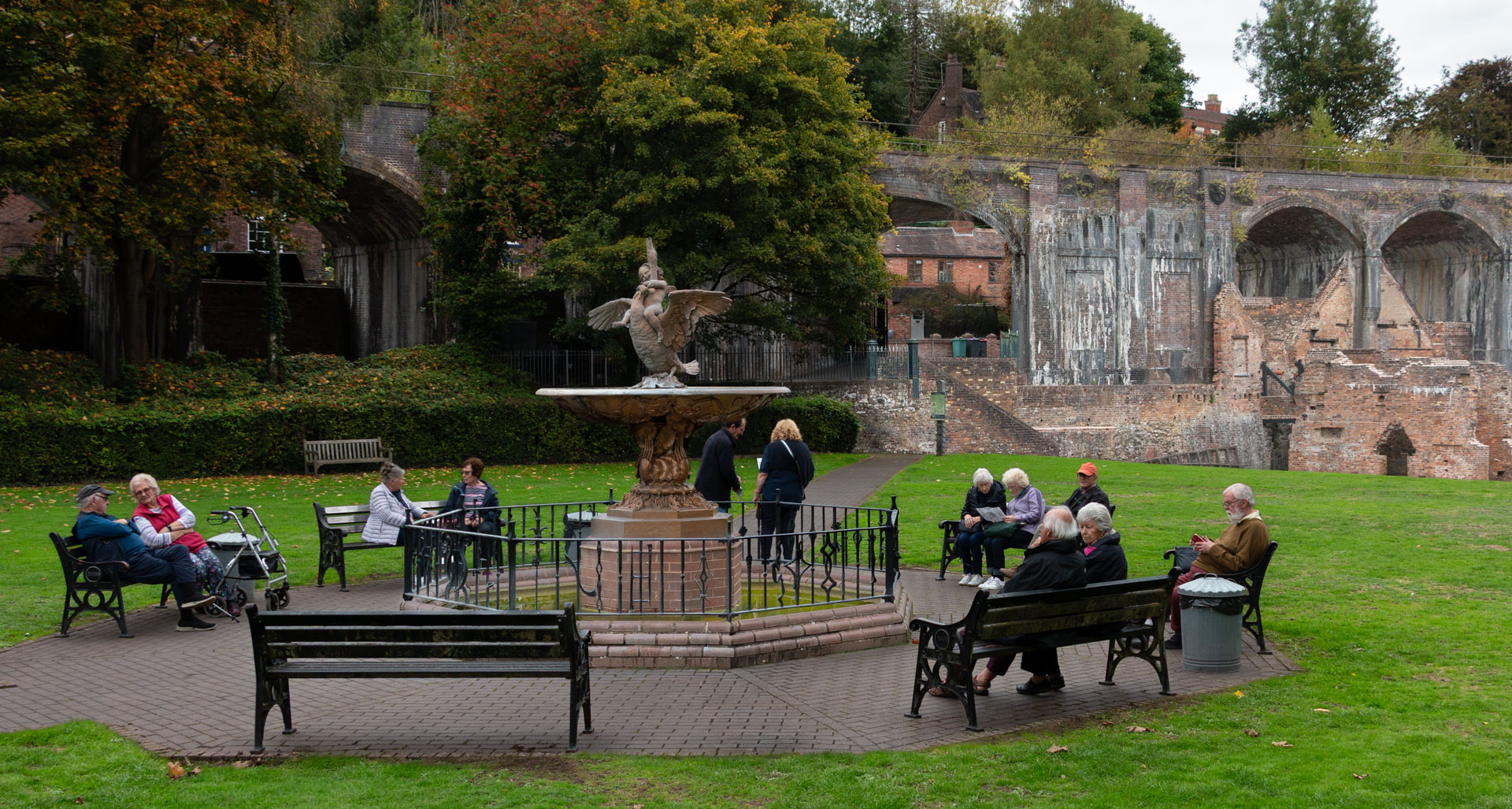
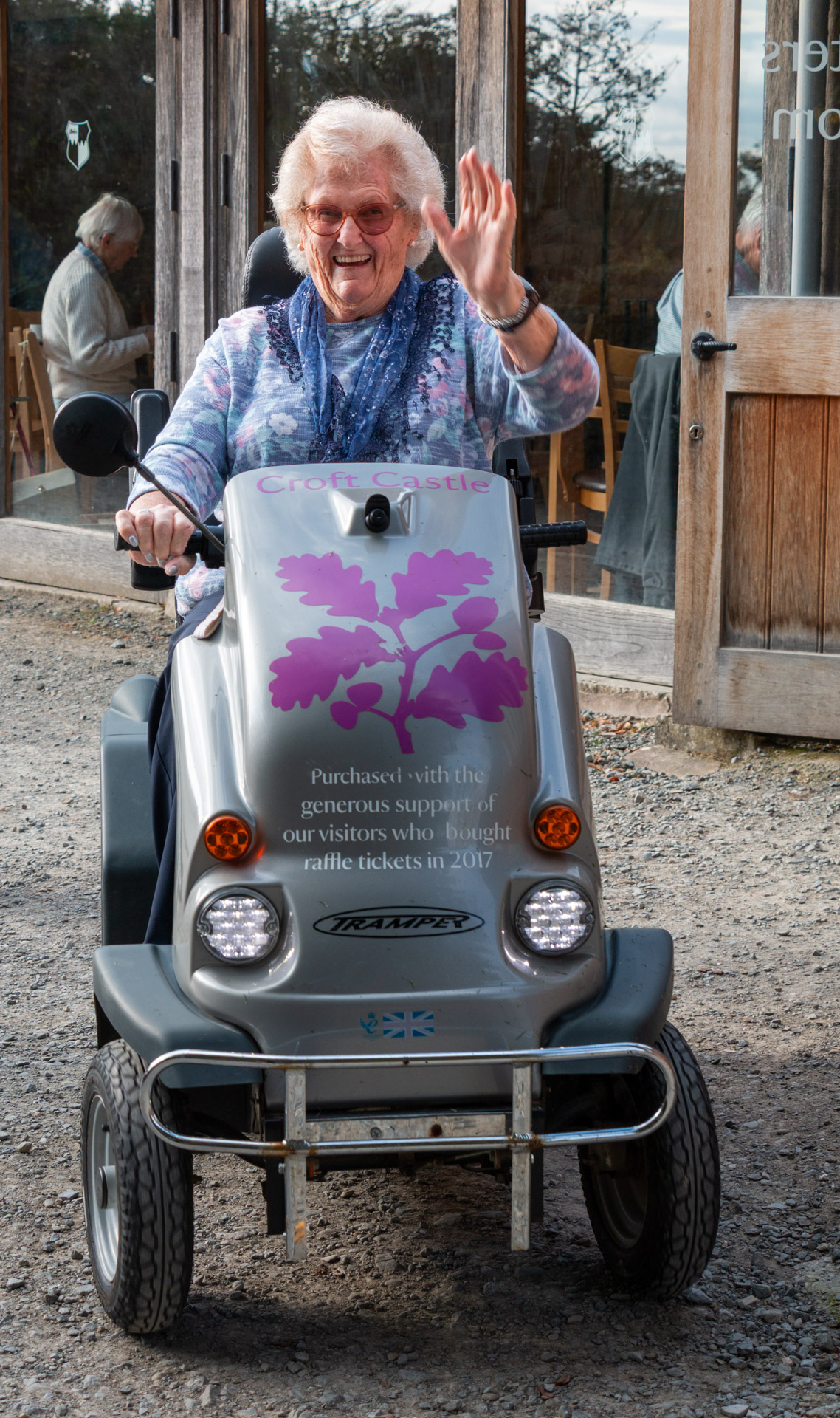
We were entertained by the sight of our lovely driver heading off on her powered scooter to find a parking place for the coach.
Wednesday
Ludlow
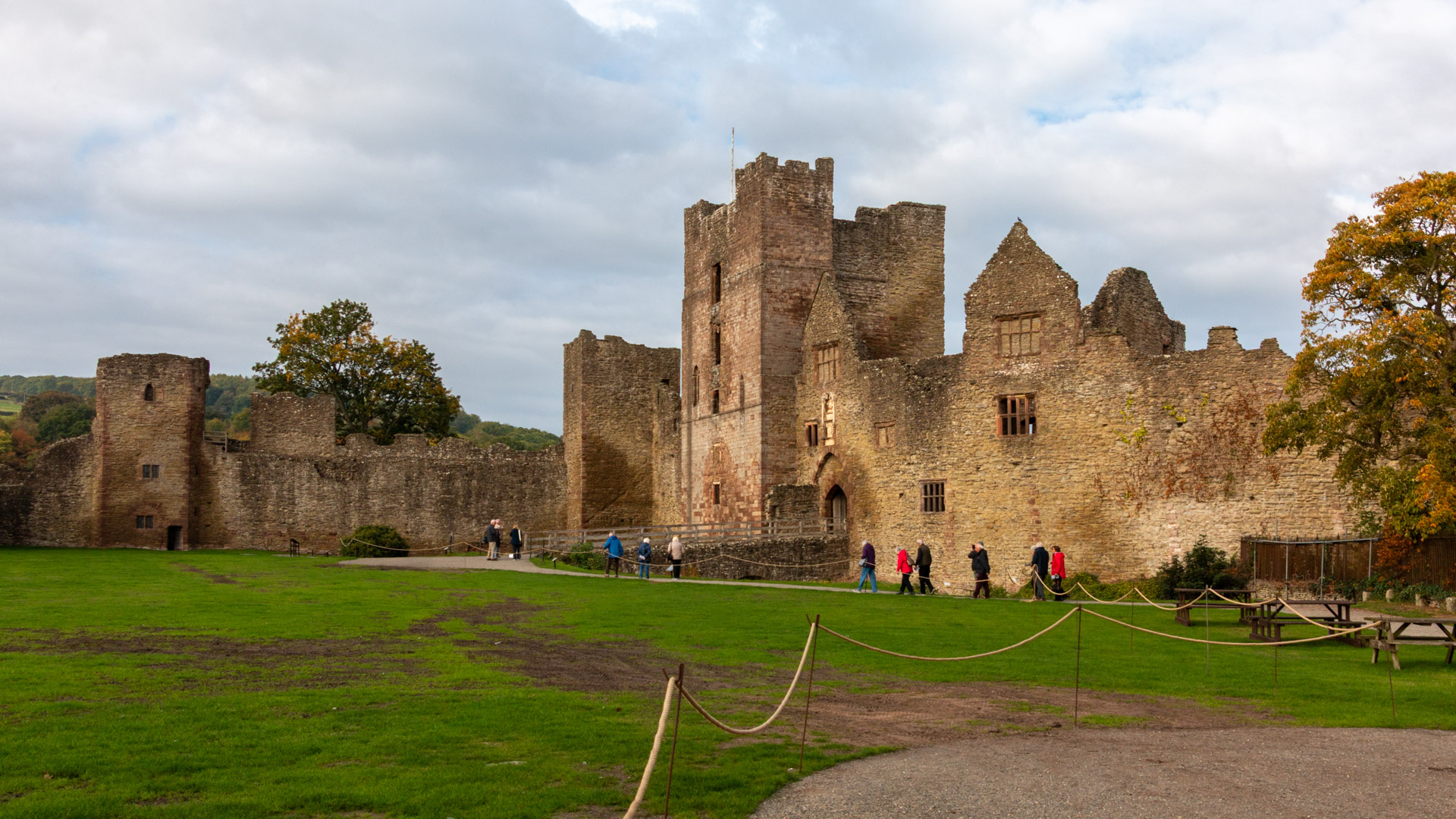
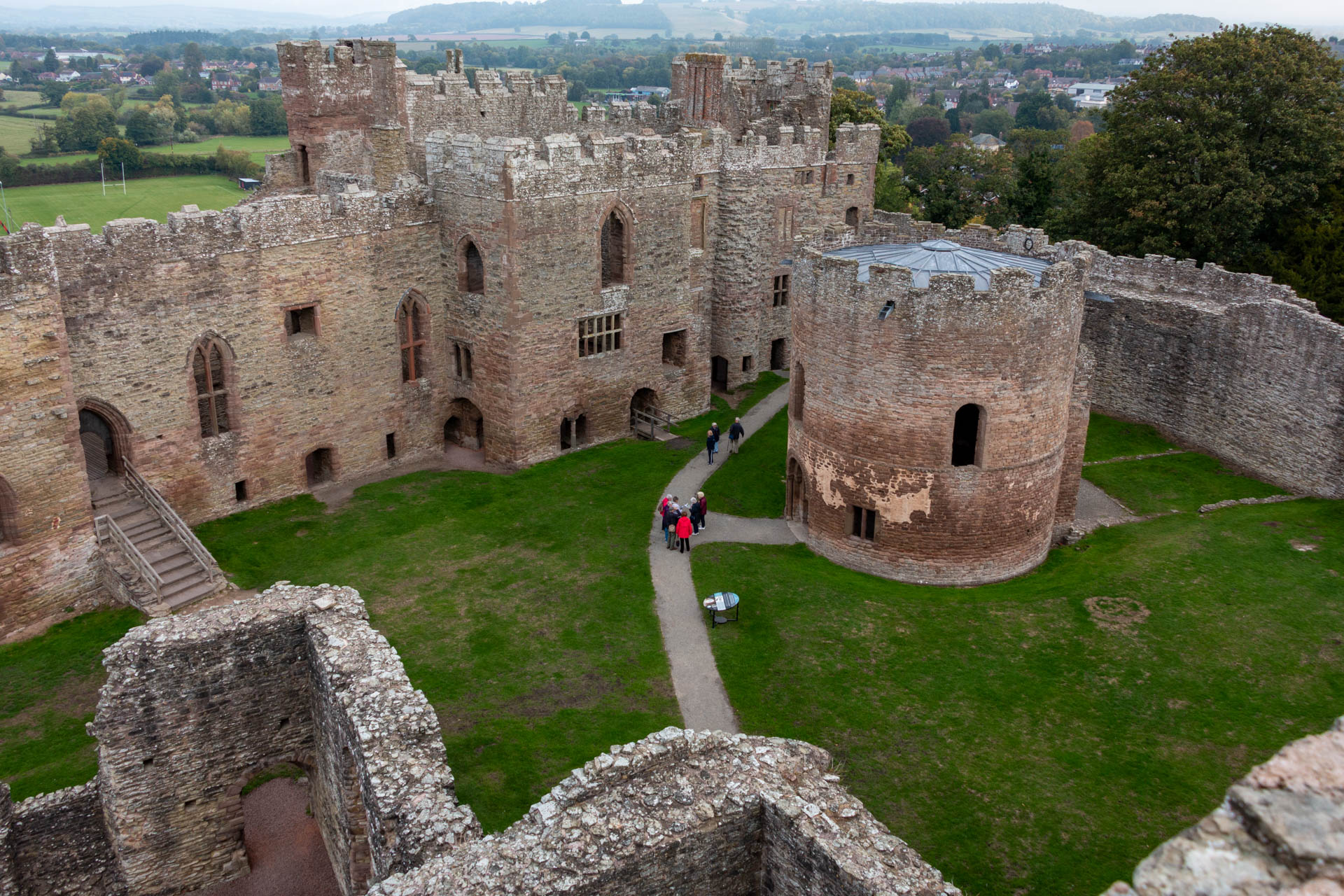
At Ludlow many of us elected to walk up the slope to the castle, although some people chose to stay in the town. Most of the group explored the important and complex Norman Castle with some braver members climbing to the battlements. The top of the Keep gave an excellent view all around, with the river winding protectively beyond. This view included the unique well-preserved round Norman church below, still available for weddings. There was a chilly wind which made us wonder how challenging it would have been to live there.
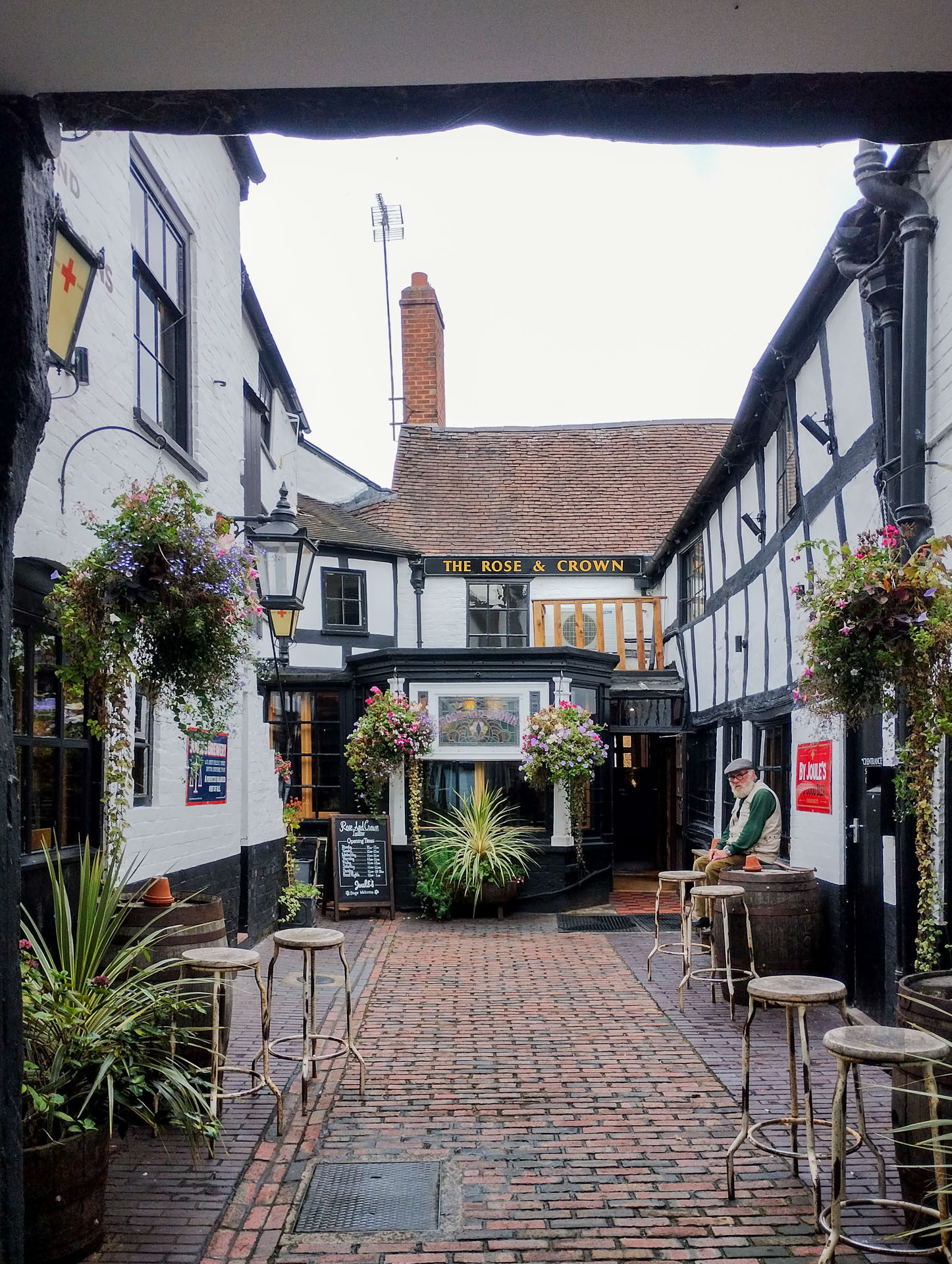
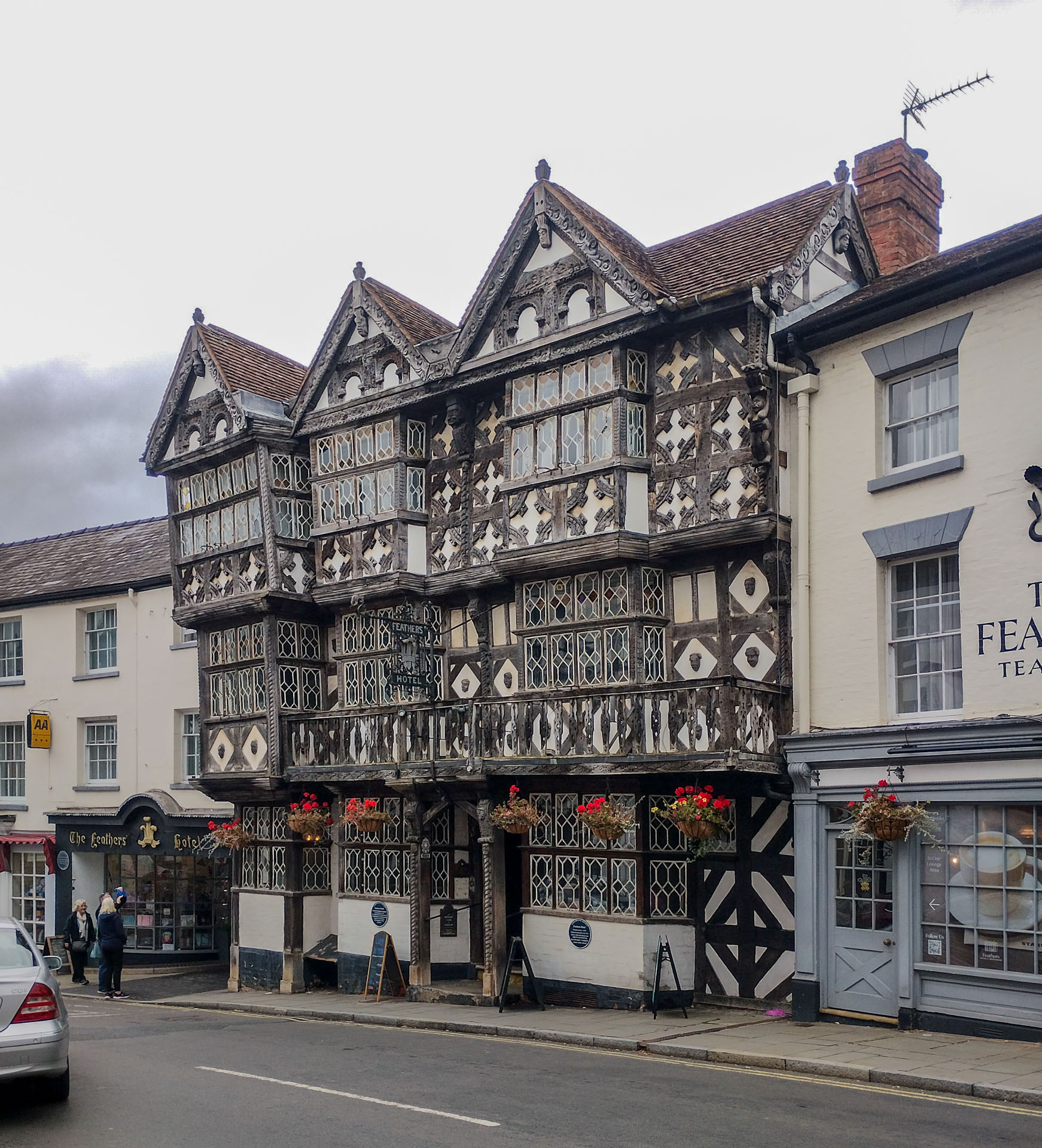
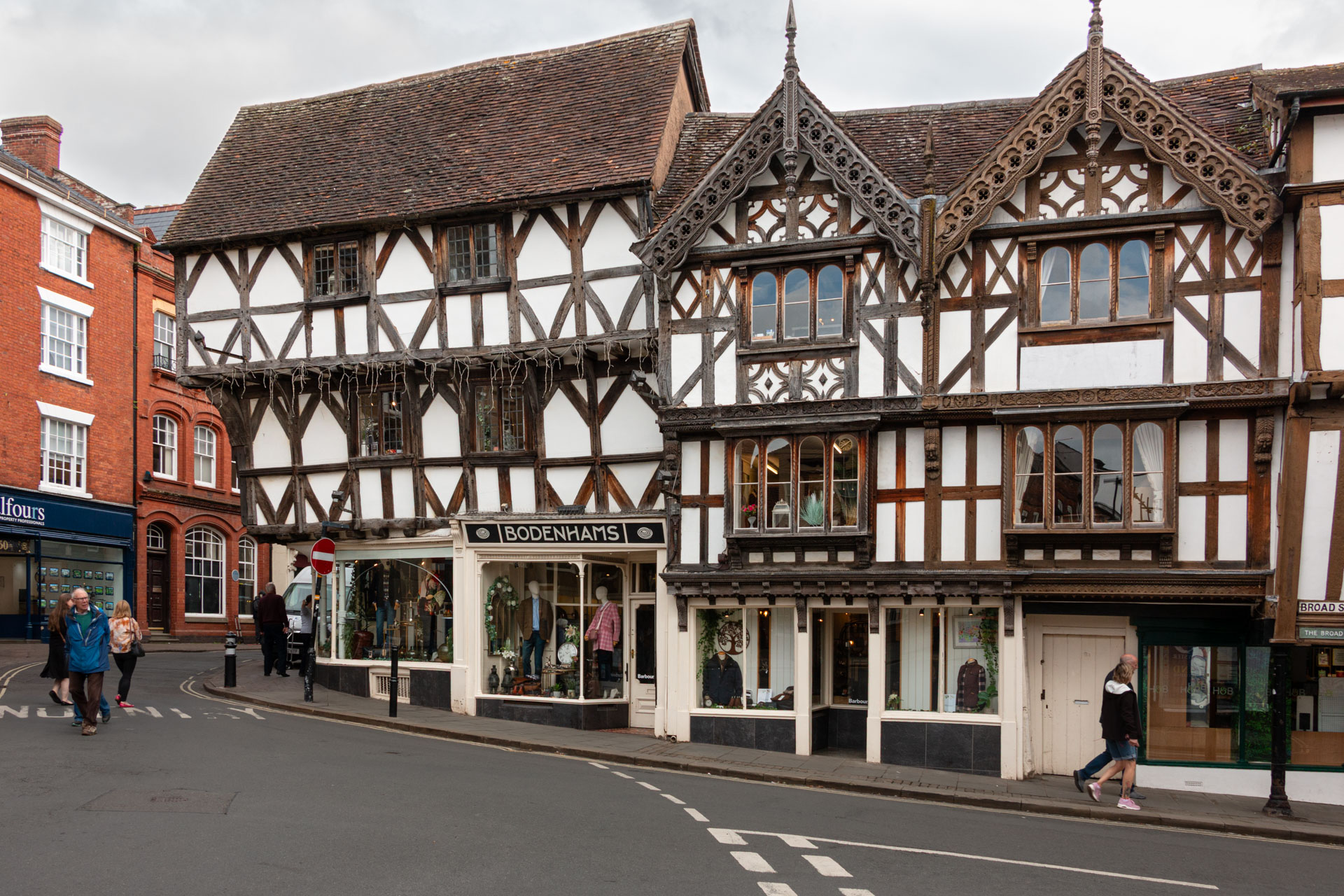
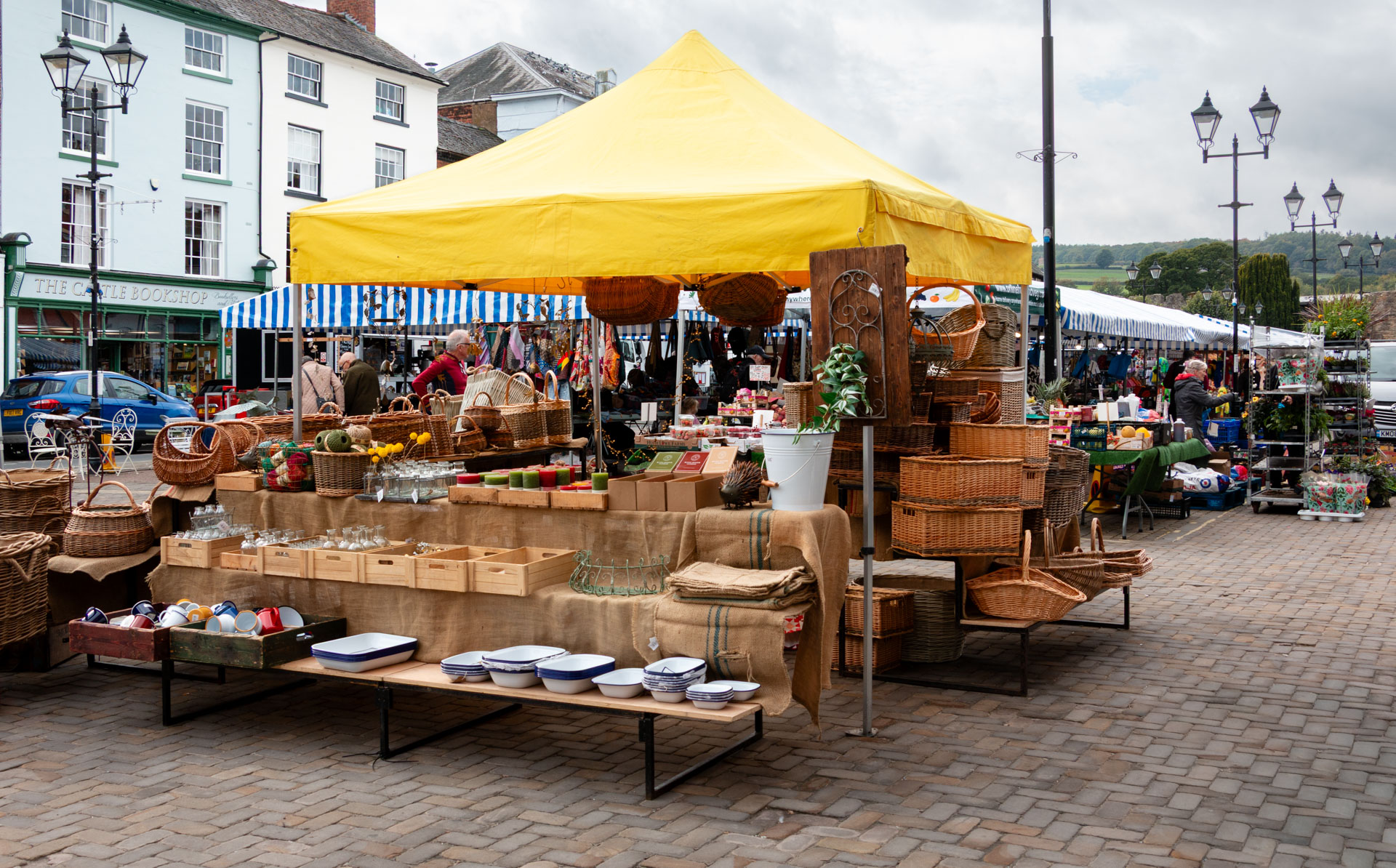
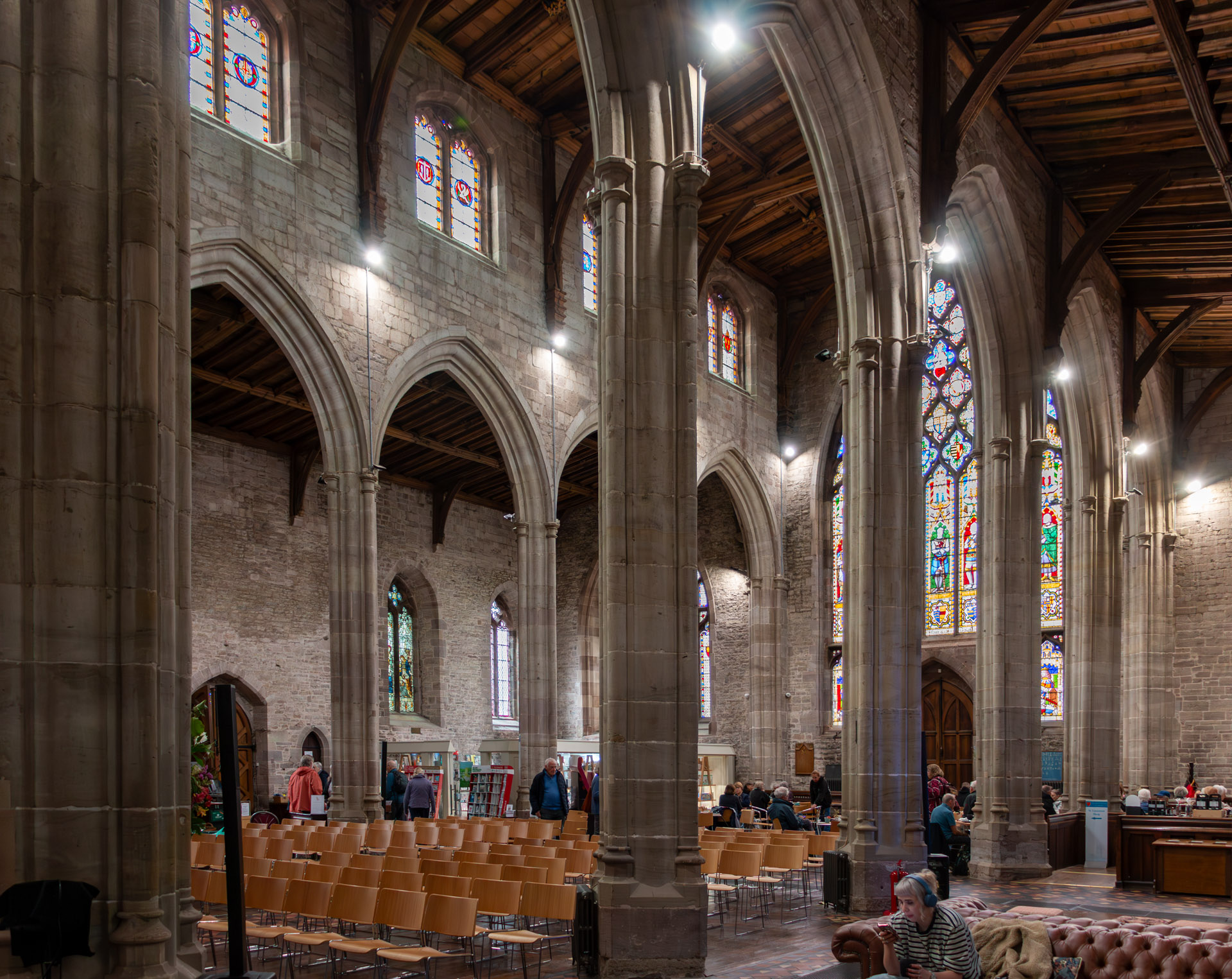
The bustling market in town displayed interesting quality stalls and there were pleasant teashops nearby for coffee, cakes, etc (a good one being the church café). People explored other quality shops as well as some of the fine largely Georgian domestic architecture in the streets going down to the river.
Croft Castle
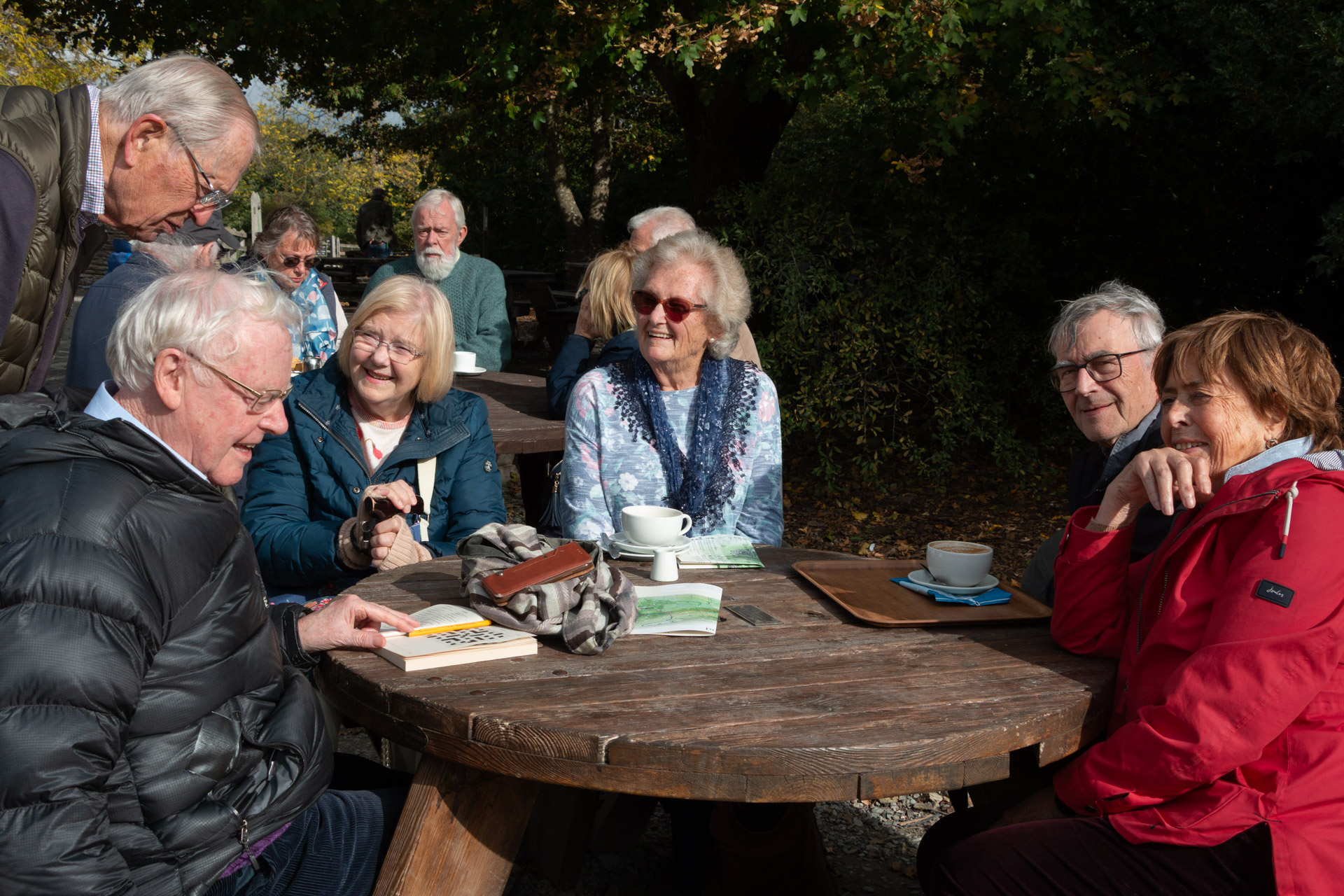
Most of the group visited Croft Castle, a historic stately home with interesting gardens managed by the National Trust. Others chose to explore the garden, stroll in the estate, and do crosswords sitting outside the cafeteria.
The Croft estate, established by Norman knight Bernard de Croft, was first noted in the Domesday Book in 1085. The Croft family spent 170 years away from the castle following the collapse of the South Sea Company and they then bought it back.
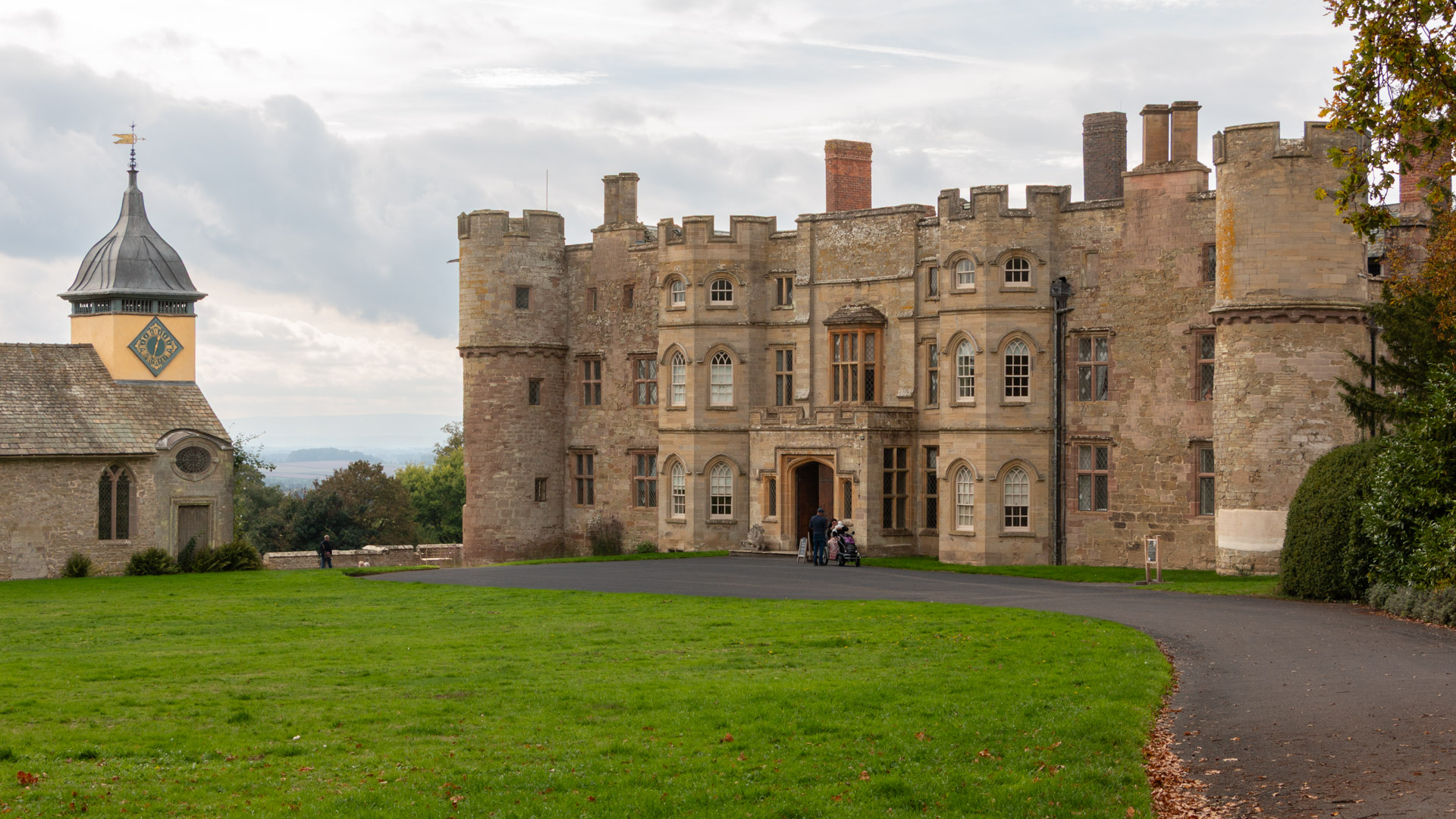
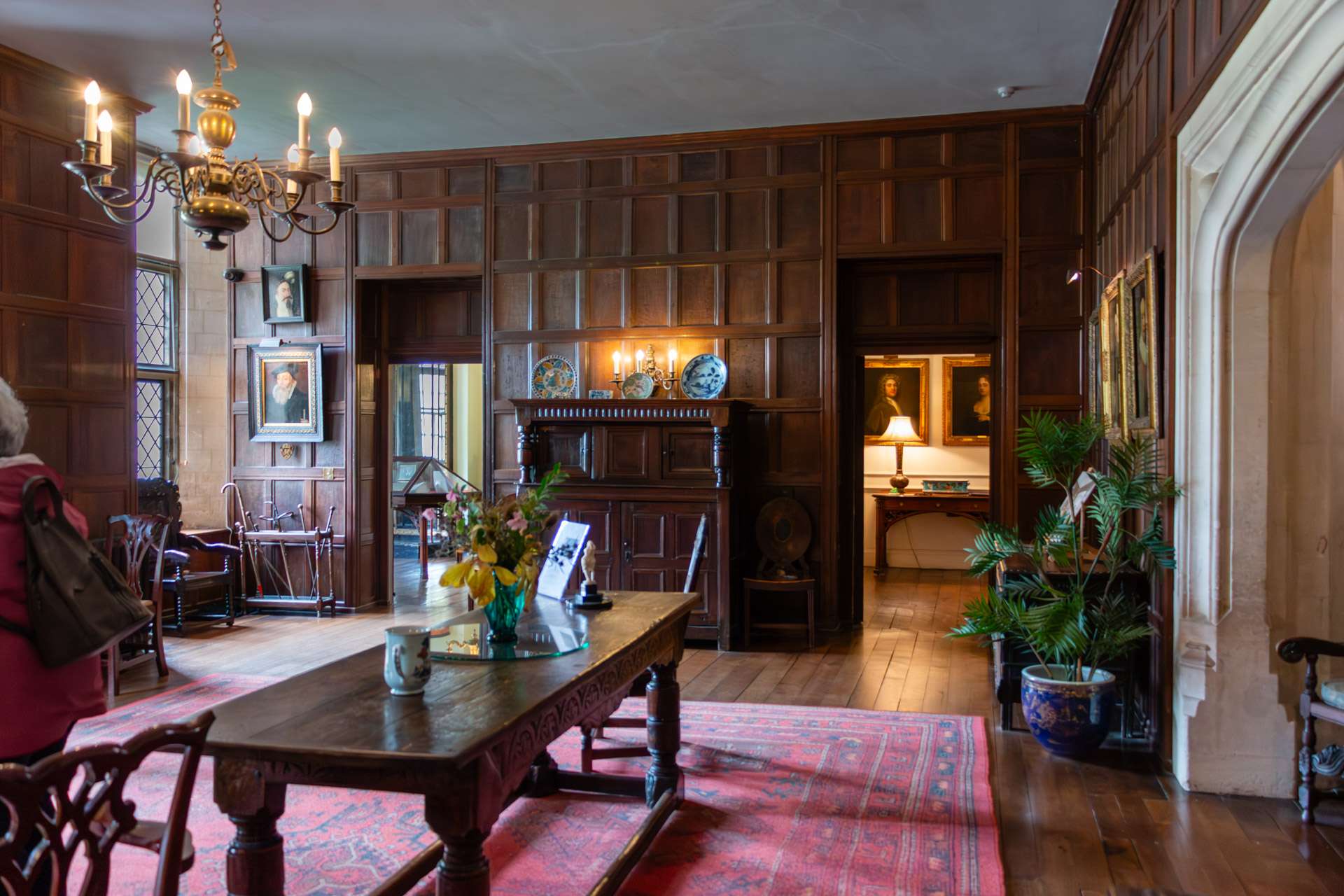
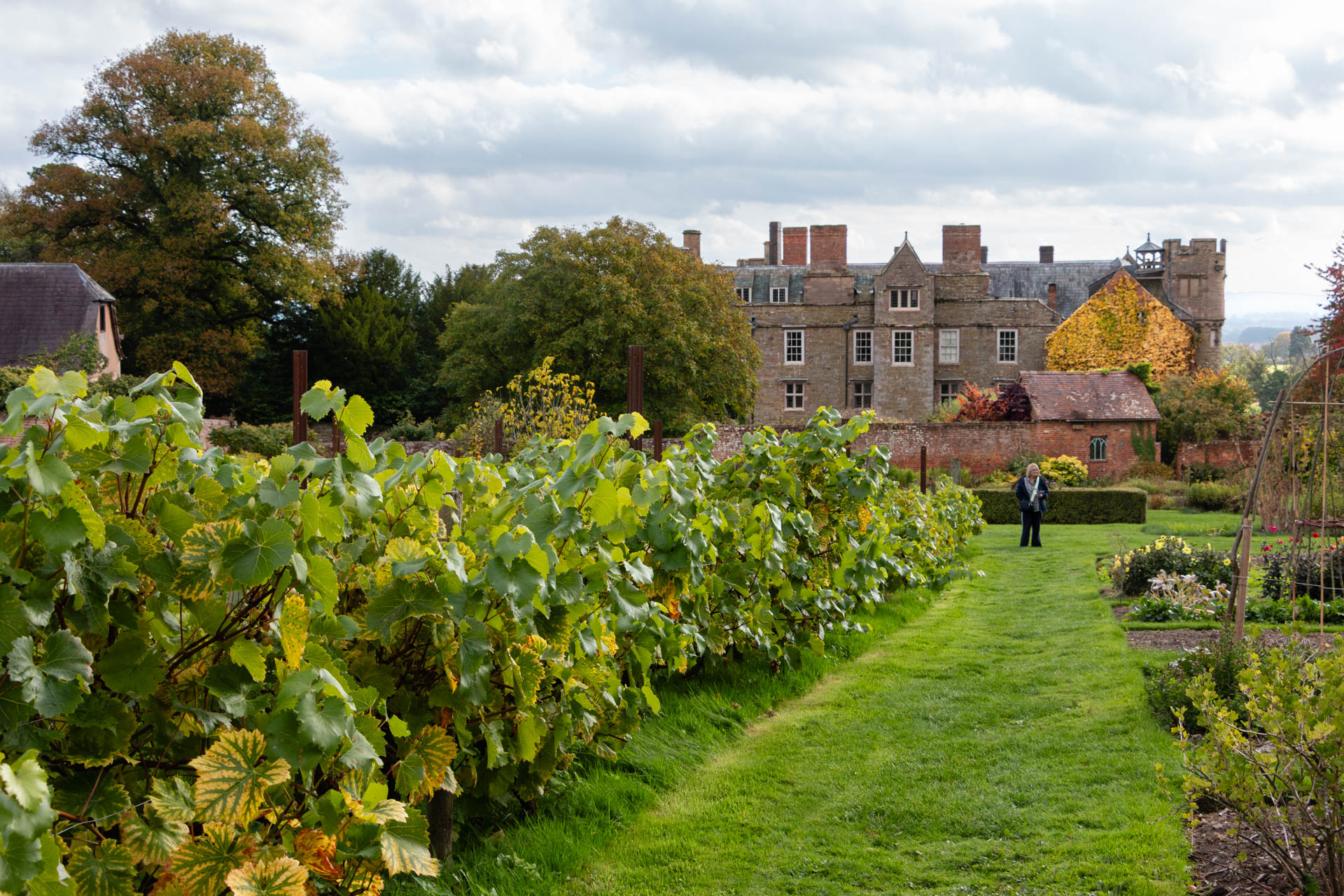
Croft Castle features an interior largely refurnished with items from the Georgian period. The property includes well maintained gardens, a small working vineyard, a walled garden, and various trees. The Croft family has retained ownership of the castle for centuries and still occupies part of it, this, together with the presence of family paintings and belongings throughout makes the castle feel homely. One wing remains inaccessible to visitors, as it is occasionally used by members of the Croft family.
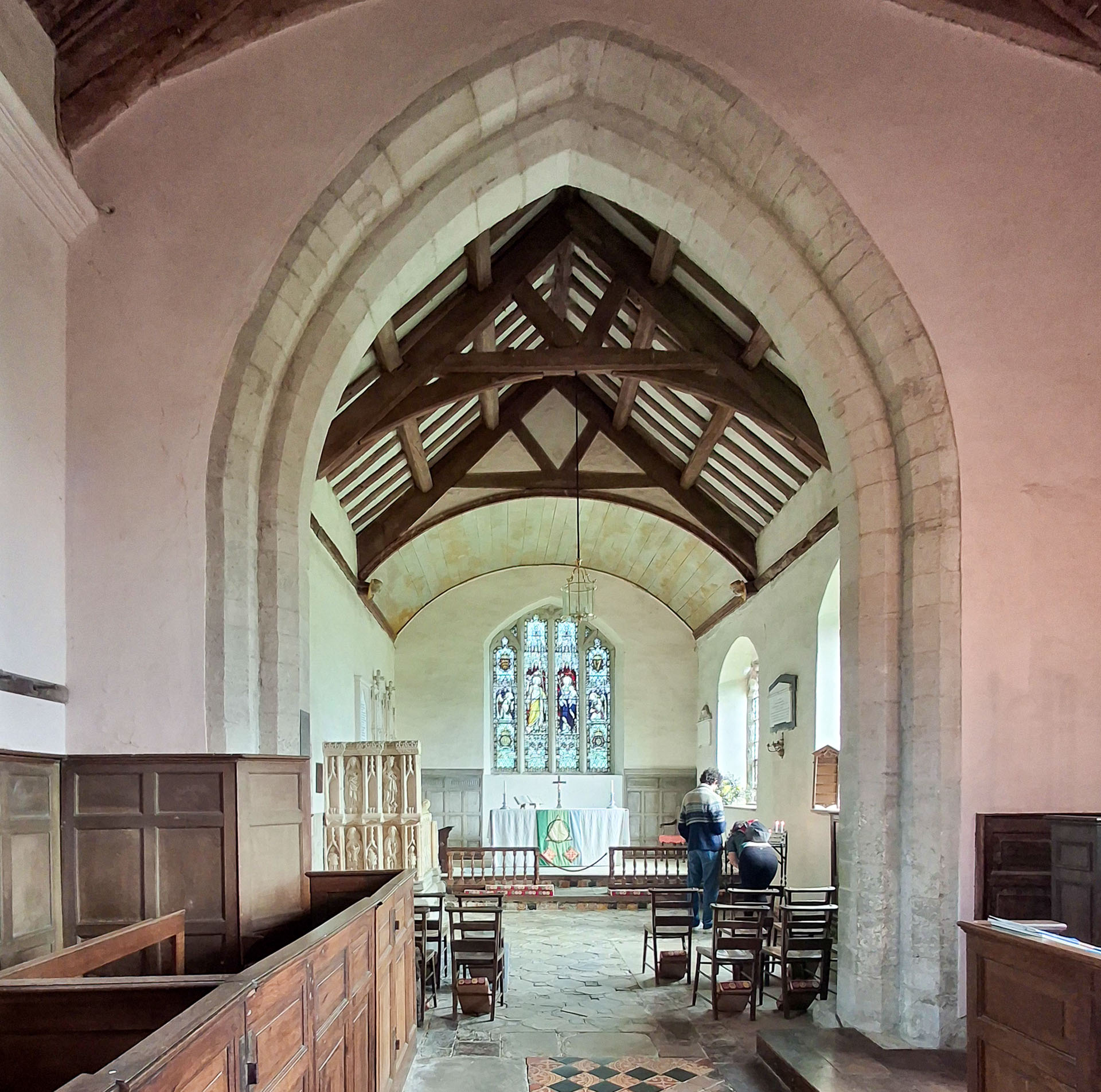
The medieval church of St Michael and All Angels, dating from the early 14th Century, sits within the castle grounds; it was enlarged in 1515 and reconstructed using original stones, including 14th Century window tracery.
Thursday
Hereford Cathedral
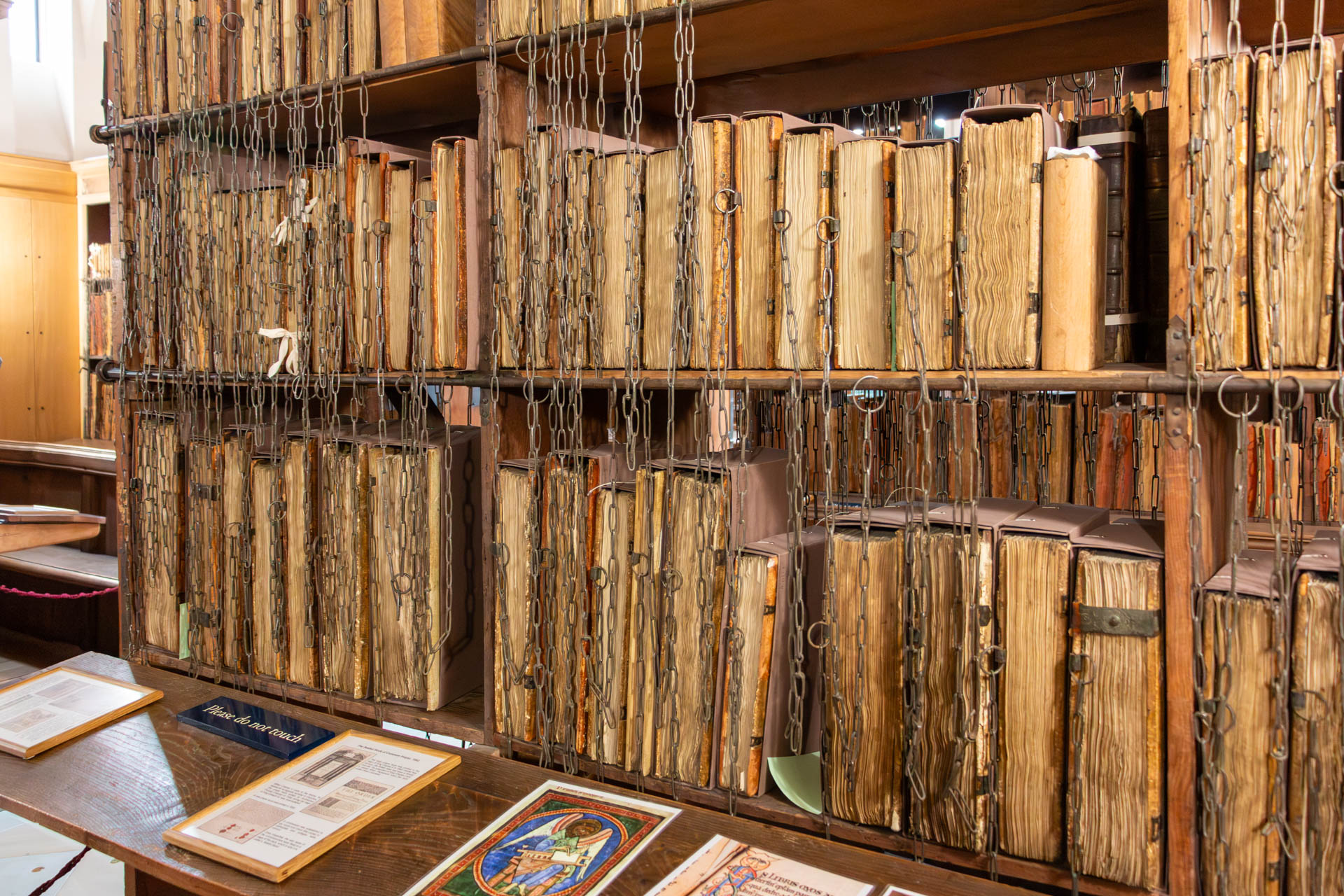
The last day brought us to Hereford Cathedral, which is second only to Canterbury in importance and architecture. It is the location of one of the Mappa Mundi and the Chained Library where books are held in place by locked chains. Our guide gave a superb history of the Norman construction on top of a pre-existing Saxon church. The famous medieval map, the Mappa Mundi (ca.1290) was viewed by us, with a good explanation of how scholars interpreted the world over 700 years ago. The chained library contains 229 illuminated manuscripts and over 1,200 early printed books. The chained books are still being used and nowadays are unchained for people to do their research in another part of the building. The cathedral café was small and could not really cope with the visitor numbers.


Swindon
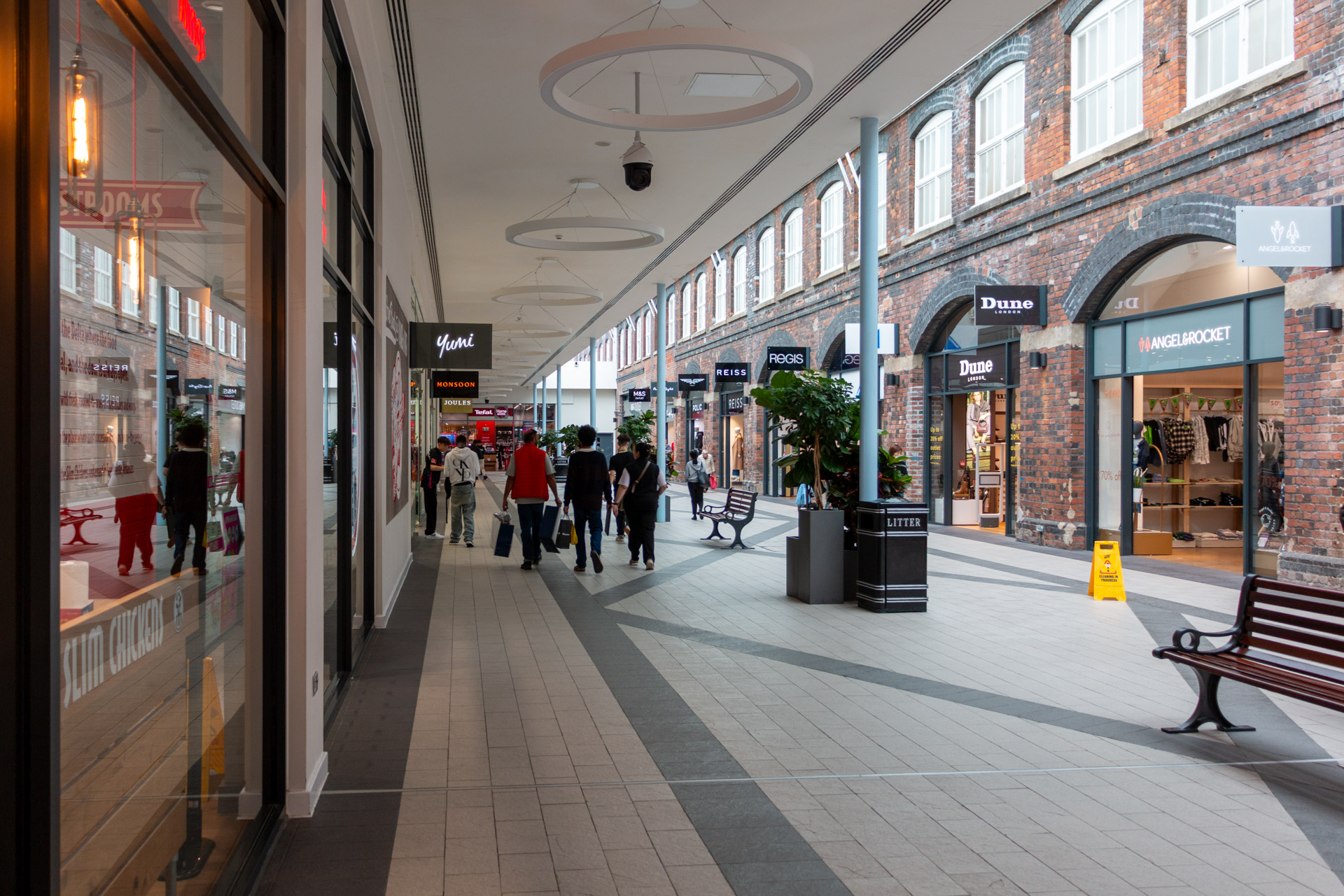
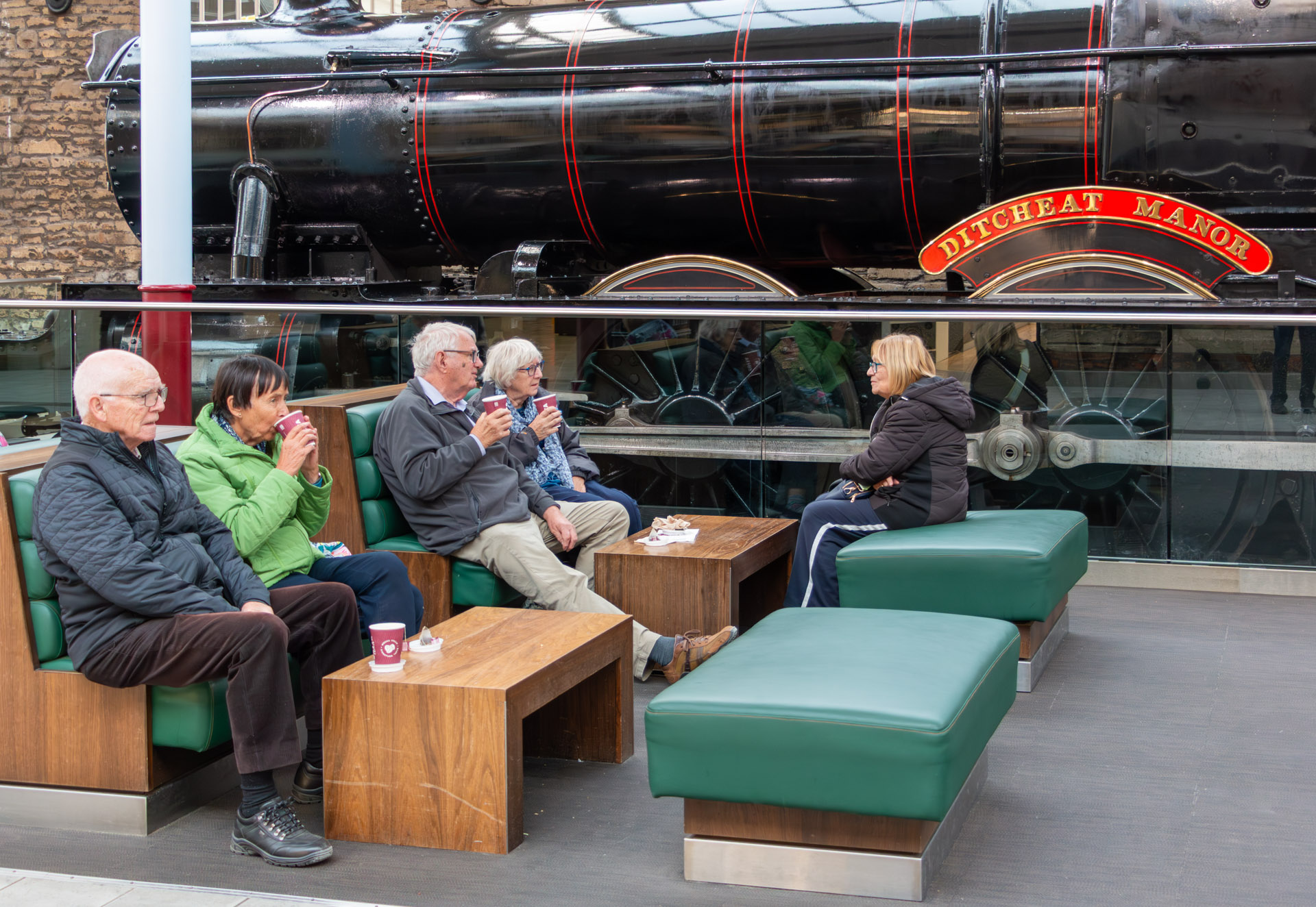
Finally, we found a decent coffee shop in the vast Swindon site of a former railway complex, now an outlet centre. Some people made a beeline for M&S!
Home
From there we were transported home by our excellent driver, Sarah, arriving back at 5pm.
All in all, this was an interesting and varied holiday and thanks to the organisers for the work which they put in.
Highlights
With such a variety of interesting venues it’s impossible to pick a single “highlight”. Every day had one or more bits we enjoyed tremendously, and there are many candidates for the “favourite” venue. What’s yours?
Comments from members on the holiday
Easily accessible and comfortable ground-floor rooms, with helpful staff in the hotel; our excellent efficient driver; a general friendliness amongst the party at mealtimes, and indeed throughout the trip, plus the varied and interesting visits, gave us a most enjoyable time.
BH
Just wanted to send my personal thanks for all your work arranging the u3a holiday, very enjoyable and full of interesting visits. Have a good rest!
LS
Let me just say that it was a brilliantly planned trip and great fun. The balance of advanced aircraft development in the morning and the earlier beginnings of engineering and the Industrial Revolution in the afternoon were amazing. I was almost converted from being a biologist to physical science. Again, thanks for all your hard work.
ME
A sincere note of thanks for researching and facilitating such an interesting and enjoyable holiday. With success behind you, I hope that you now have time to rest and reflect. Please share these sentiments with Madeleine and Pavel for their helpful support roles.
TG
Acknowledgements
If you are curious about who was responsible for the seamless organisation of this holiday, credit is due to Tim and Angela Southern, ably assisted by Pavel and Madeleine Kudlac. The smooth running of the trip is a testament to their considerable effort and meticulous planning. Additionally, sincere thanks are extended to everyone who contributed personal stories and memories from the journey; these anecdotes have enriched this account and brought it to life.
The group photo at the top – that’s everyone who joined us on the holiday, except for Pavel Kudlac, who was busy behind the lens capturing us all. Thanks to everyone for gathering together and posing – it’s no easy feat to get everyone looking at the camera! The photographs scattered throughout were taken by Madeleine Kudlac, Mike Sisson, Paul Robinson, Pavel Kudlac or Tim Southern, and we’re grateful to each of them for letting us use their pictures. It really helps us relive those special moments!
Peter Johnson
November 2025